
The Amazing Angkor Wat Temple Complex in Siem Reap
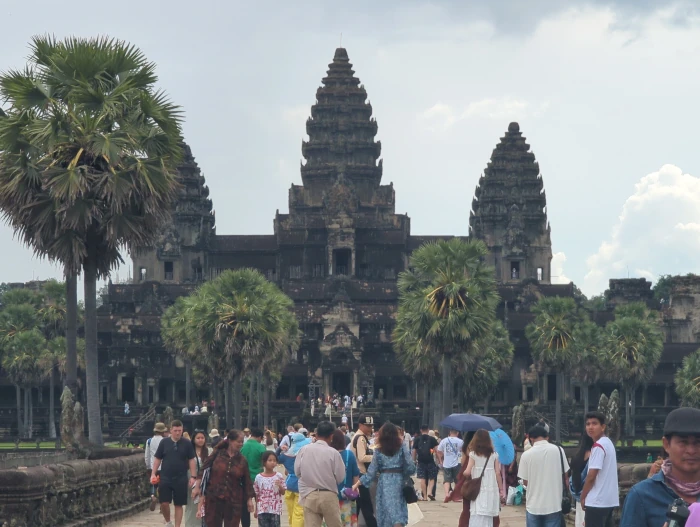
Angkor Wat is Cambodia's best-known temple and one of the world's most recognizable ancient monuments. Located just outside Siem Reap, the complex was built in the early 12th century during the height of the Khmer Empire and remains a national symbol, including on the Cambodian flag.
Originally constructed as a Hindu temple dedicated to Vishnu, Angkor Wat gradually transitioned into a Buddhist temple and remains an active religious site today. Its towering lotus-shaped spires, immense stone galleries, and intricate carvings make it one of the greatest architectural achievements in Southeast Asia.
For stronger context before your visit, start at the Angkor National Museum, where exhibits and audio guides explain the Khmer Empire in plain detail.
Topics In This Guide
- The History of Angkor Wat
- The Approach to the Temple
- Intricate Stone Carvings
- Bas-Reliefs and Ancient Stories
- Exploring the Interior
- Climbing to the Upper Levels
- The Temple Courtyards
- How To Buy Your Ticket To Angkor Wat
- Free Temples Around Angkor Wat
- Wildlife Around Angkor Wat
- Essential Information
- Best Time to Visit Angkor Wat
- Where Angkor Wat Is Located
- Final Verdict
- Overall Recommendation & Quick Takeaways
The History of Angkor Wat
Angkor Wat was built during the reign of King Suryavarman II in the early 12th century, when the Khmer Empire controlled much of mainland Southeast Asia and Angkor served as its capital.
Unlike many other temples in the complex, Angkor Wat faces west rather than east. Scholars believe this unusual orientation relates to its dedication to Vishnu and possibly its role as a funerary temple.
After the decline of the Khmer Empire, the temple gradually transitioned from Hindu worship to Buddhism. Unlike many other sites, it was never completely abandoned, which helped preserve its structure over the centuries.
The Approach to the Temple
The approach to Angkor Wat is one of the most memorable parts of the visit. A long stone causeway crosses the massive moat, gradually revealing the temple’s iconic towers.
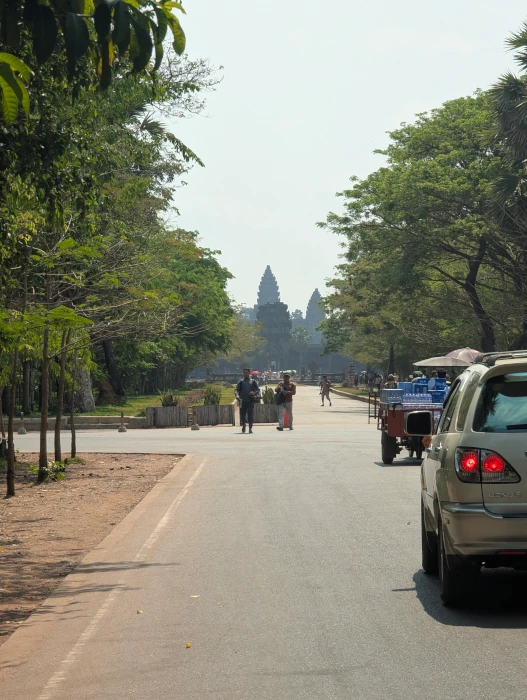
The moat stretches nearly 200 meters wide and represents the cosmic ocean surrounding Mount Meru in Hindu cosmology. The temple itself symbolizes this sacred mountain, making the entire complex a physical model of the universe.
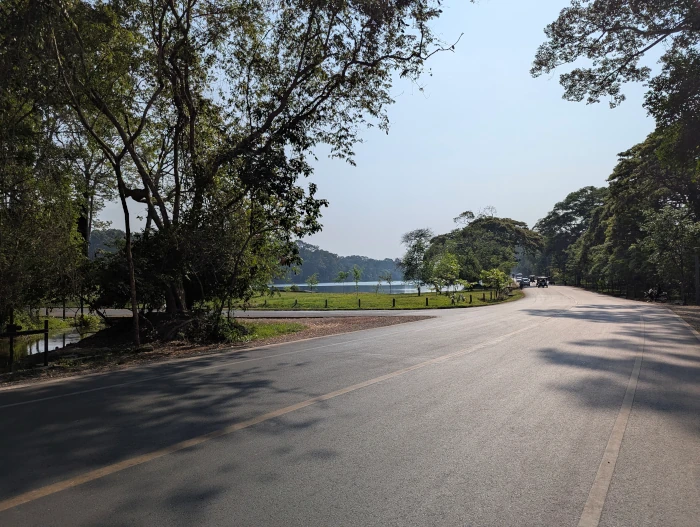
As you walk forward, the five towers gradually rise into view. The central tower reaches about 65 meters, dominating the surrounding landscape.
Intricate Stone Carvings
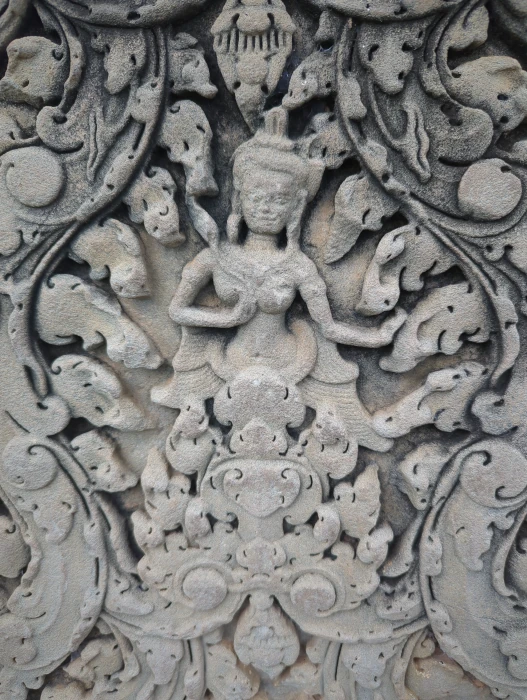
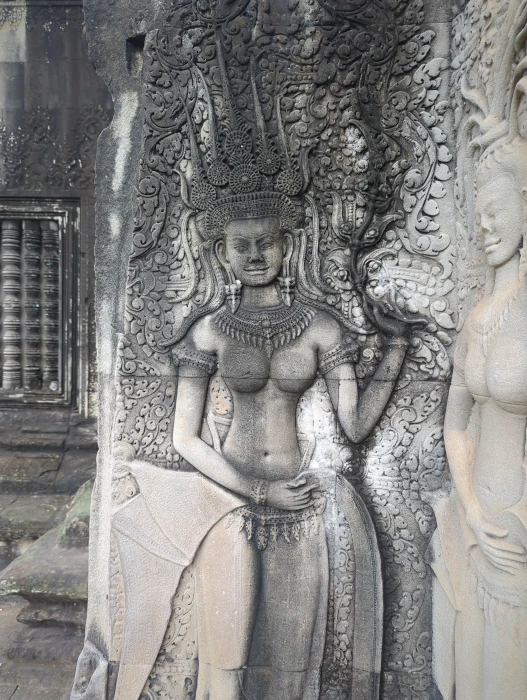
Angkor Wat is renowned for its intricate carvings, particularly the apsaras—celestial dancers from Hindu mythology.
Each figure features unique hairstyles, jewelry, and expressions, demonstrating the extraordinary skill of Khmer artisans more than 800 years ago.
Bas-Reliefs and Ancient Stories
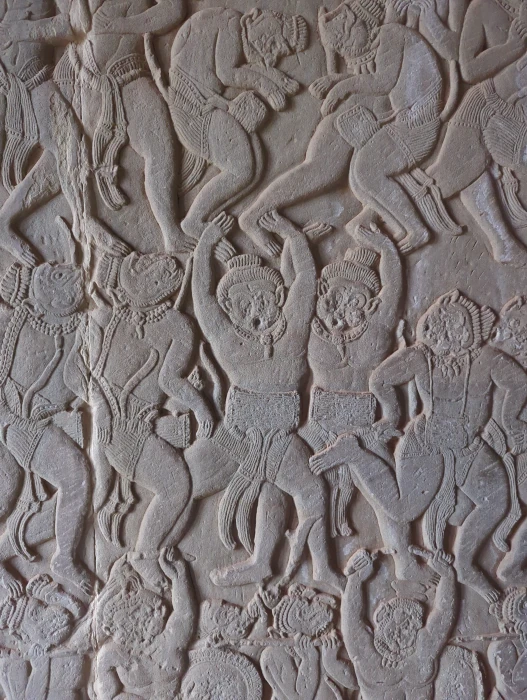
The temple’s bas-reliefs are among the largest in the world, depicting scenes from the Ramayana and Mahabharata.
The most famous panel shows the “Churning of the Ocean of Milk,” a vast scene of gods and demons pulling a serpent in a cosmic struggle.
Exploring the Interior
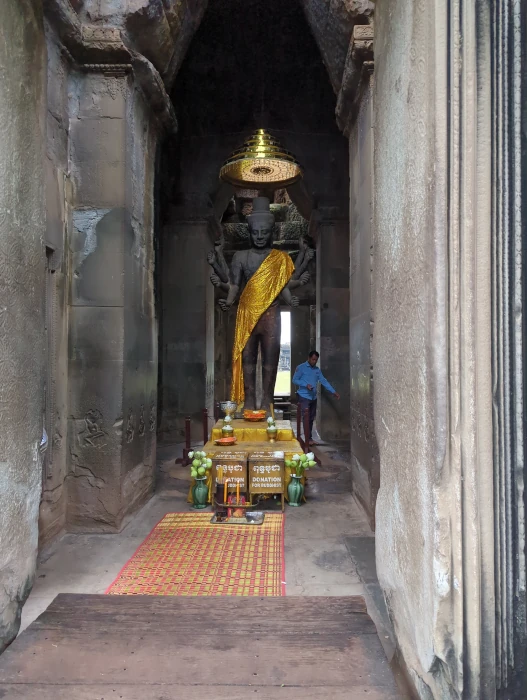
Inside, long corridors supported by sandstone pillars create a strong sense of symmetry and scale.
Several chambers still contain Buddhist statues and offerings, reflecting Angkor Wat’s continued role as a place of worship.
Climbing to the Upper Levels
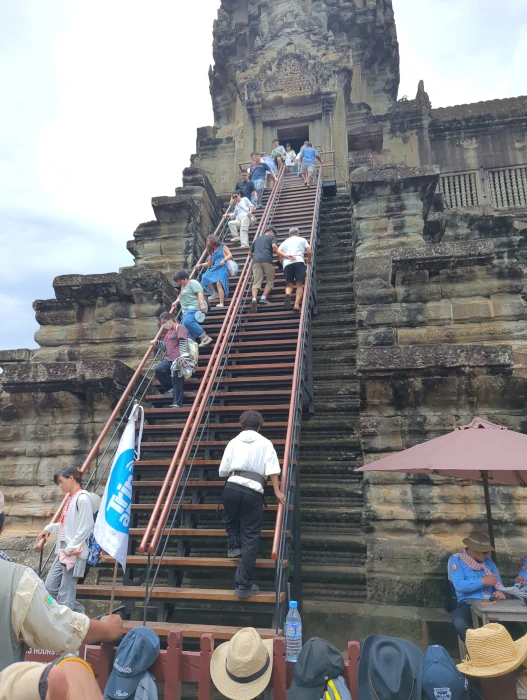
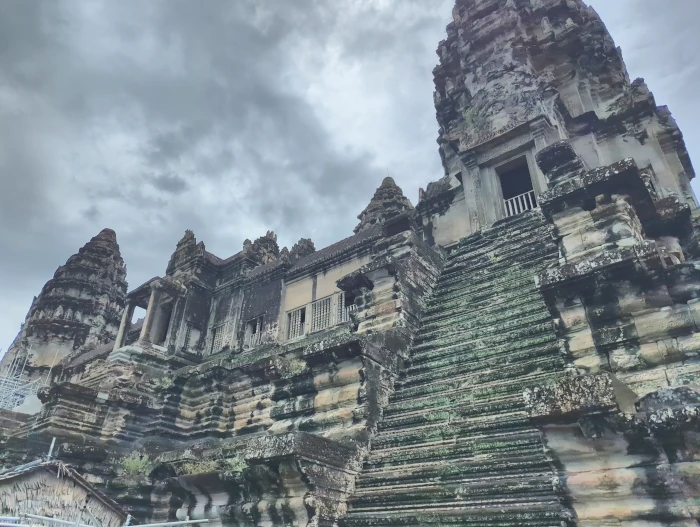
The steep staircases symbolize the difficulty of reaching the realm of the gods.
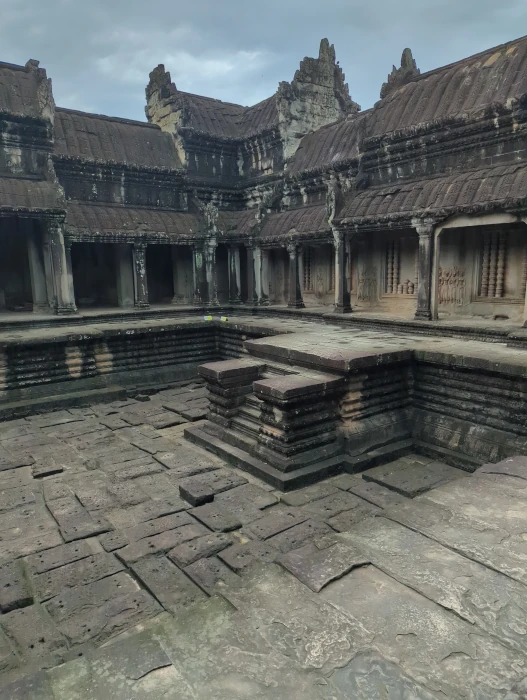
From the top, visitors can see the full layout of the temple and the surrounding jungle.
The Temple Courtyards
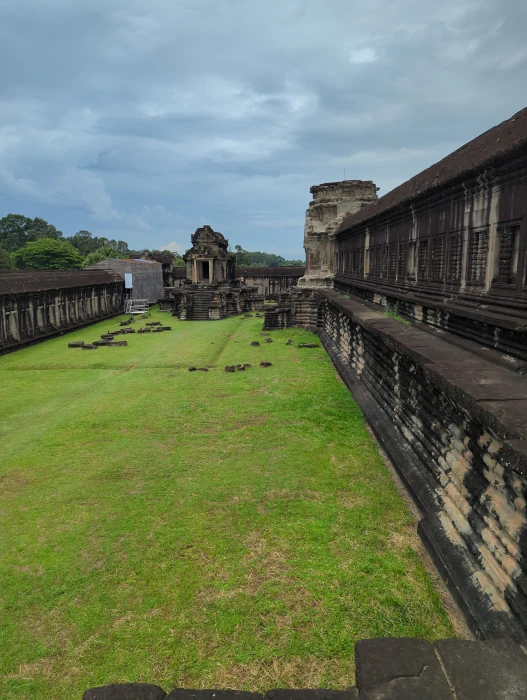
The courtyards create a layered journey inward toward the temple’s sacred center.
How To Buy Your Ticket To Angkor Wat
It can be a little tricky to find if you're driving there for the first time. If you take a tuk-tuk, the driver will take you directly to the ticket office. The fare is typically around $10.
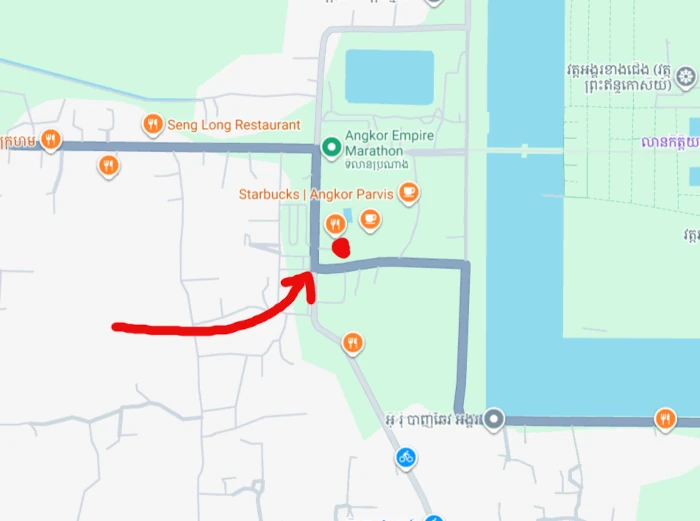
The ticket office is located outside the main temple area. Its exact location is at the end of a small access road leading into the Angkor Wat Parvis area.
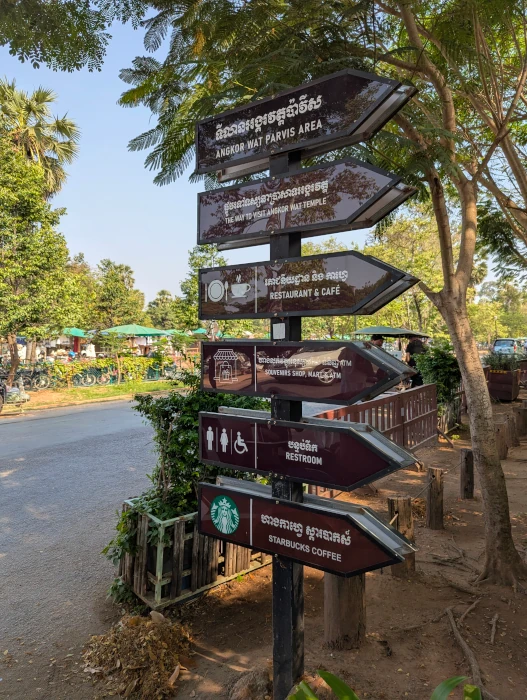
You’ll walk through a market-style entrance before reaching the ticket machines. It may feel like you’re going the wrong way, but you’re not. This area is also a good place to grab a meal before heading into the temple complex.

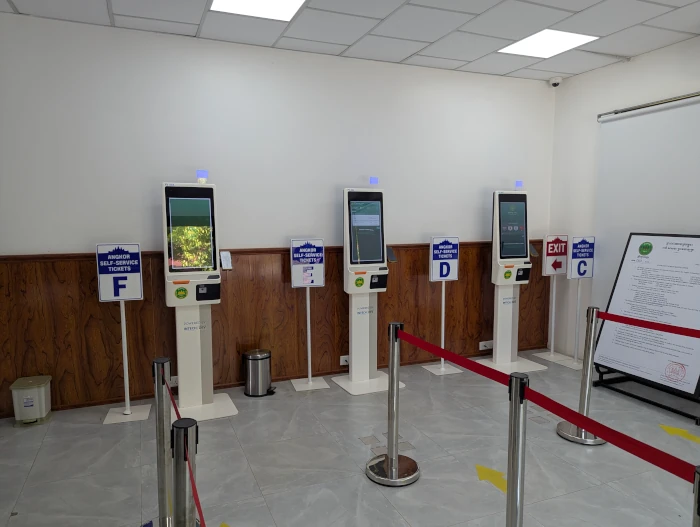
The self-service ticket machines are easy to use, and staff members are available to assist and answer questions. Pricing is clearly marked inside the ticketing area.
Tip: Get there early—around 8:30 a.m.—to beat the crowds. Bring a water jug and an umbrella. During the rainy season, pack a raincoat. Sturdy footwear, such as hiking boots, is recommended. Tour guides are available both inside and outside Angkor Wat.
Important: Keep your ticket with you at all times.
Free Temples Around Angkor Wat
Some smaller temples near the edges of the Angkor area can be visited without a pass.
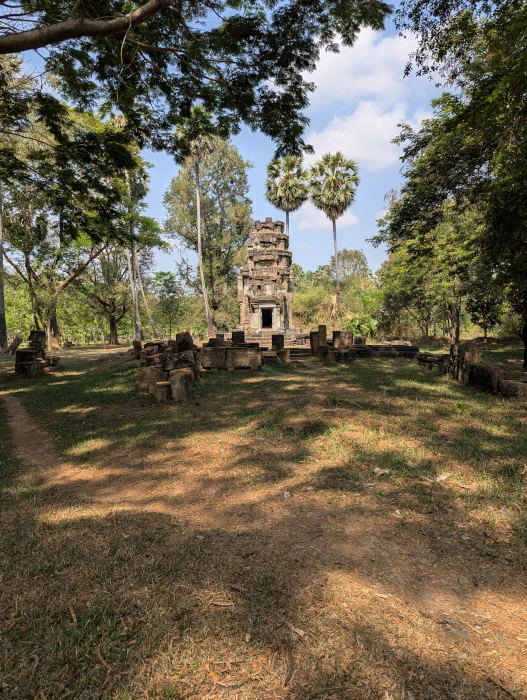
These sites are quieter, less restored, and offer a more relaxed experience. After the crowds of Angkor Wat, they provide a completely different atmosphere.
Important: Deeper areas still require a valid Angkor Pass.
Wildlife Around Angkor Wat
Monkeys and other wildlife are common. Keep your distance and do not feed them.
Essential Information
- 1-Day: $37
- 3-Day: $62
- 7-Day: $72
Hours: 5:00 AM – 5:30 PM
Best Time to Visit Angkor Wat
Sunrise is the most popular time to visit. The cooler months from November to February offer the most comfortable conditions.
Where Angkor Wat Is Located
Angkor Wat is located about 6 km north of Siem Reap.
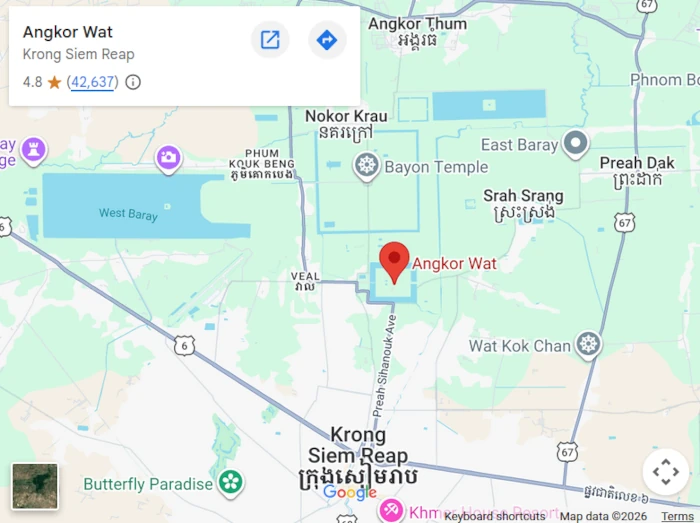
Angkor Wat is not just a temple—it’s an entire experience.
Final Verdict
It’s easy to approach Angkor Wat as a single landmark, but in reality, it’s a vast historical landscape that requires time, patience, and a bit of planning to fully appreciate.
The scale, detail, and atmosphere can be overwhelming at first—but that’s part of what makes it memorable. Whether you’re walking the causeways at sunrise, exploring quiet corners of the temple, or discovering lesser-known sites nearby, the experience builds over time.
If you treat it as a quick stop, you’ll miss most of what makes it special. But if you slow down and explore beyond the obvious, Angkor Wat becomes something far more rewarding.
Overall Recommendation
Overall Recommendation: 9 / 10 - A world-class heritage site that justifies the trip to Siem Reap on its own.
Quick Takeaways
- Time: Allow at least half a day; a full day is better if you want to explore the wider complex.
- Tickets: 1-day pass $37, 3-day pass $62, 7-day pass $72 (2026 prices). Buy at the official ticket centre on Apsara Road.
- Sunrise: Arrive by 5:15 AM for a good position at the reflecting pools.
- Experience Value: 9.5 / 10
- Uniqueness: 10 / 10
- Accessibility: 7 / 10 — Uneven stone surfaces and steep stairs in places.
- What to Bring: Water, sunscreen, comfortable shoes, and a hat. There is limited shade inside the complex.
- Guides: A licensed guide ($25–35 for a half day) adds a lot of context you'd otherwise miss.