
 Siem Reap Inside Asia

One of the best places to understand the history of the Angkor temples is the Angkor National Museum in Siem Reap, where visitors can explore centuries of Khmer civilization through sculptures, artifacts, and multimedia exhibits.
Most travelers come to Siem Reap to visit the temples of Angkor. Before exploring those ancient ruins, however, many visitors begin their journey at the museum, which provides a helpful introduction to the history, religion, and culture that shaped the Angkor Empire.
Inside, visitors encounter sculptures, religious artifacts, inscriptions, and interactive displays that explain how Khmer civilization developed and constructed some of the most remarkable temples in Southeast Asia. The exhibits place the temples in their historical context, helping visitors better understand the architecture, symbolism, and artistic traditions they will later see throughout the Angkor Archaeological Park.
Topics In This Guide
- What Is the Angkor National Museum?
- History of the Museum
- Understanding Khmer Civilization
- Exploring the Museum Galleries
- The Gallery of 1,000 Buddha
- The Great Khmer Kings
- Angkor Architecture and Engineering
- Artifacts and Sculptures
- Visitor Experience
- Where the Angkor National Museum Is Located
- Why Visit the Angkor National Museum?
What Is the Angkor National Museum?
The Angkor National Museum is an archaeological museum dedicated to preserving and explaining the art, culture, and history of the Khmer Empire. The museum focuses primarily on the Angkor period, which lasted roughly from the 9th to the 14th century and produced some of Southeast Asia’s most impressive temple architecture.
Rather than simply displaying artifacts, the museum presents a chronological story of how Khmer civilization developed. Visitors move through themed galleries that explain religion, royal history, architecture, and everyday life in ancient Angkor.
The museum opened in 2007 and has since become one of the most important cultural attractions in Siem Reap.
History of the Museum
The Angkor National Museum was established to help preserve and display important artifacts discovered at Angkor archaeological sites. Many objects exhibited here are on loan from the Cambodian National Museum in Phnom Penh and from the Conservation d’Angkor collection.
The goal of the museum is not only to protect historical objects but also to provide visitors with the context needed to understand the temples scattered across the Angkor region.
Understanding Khmer Civilization
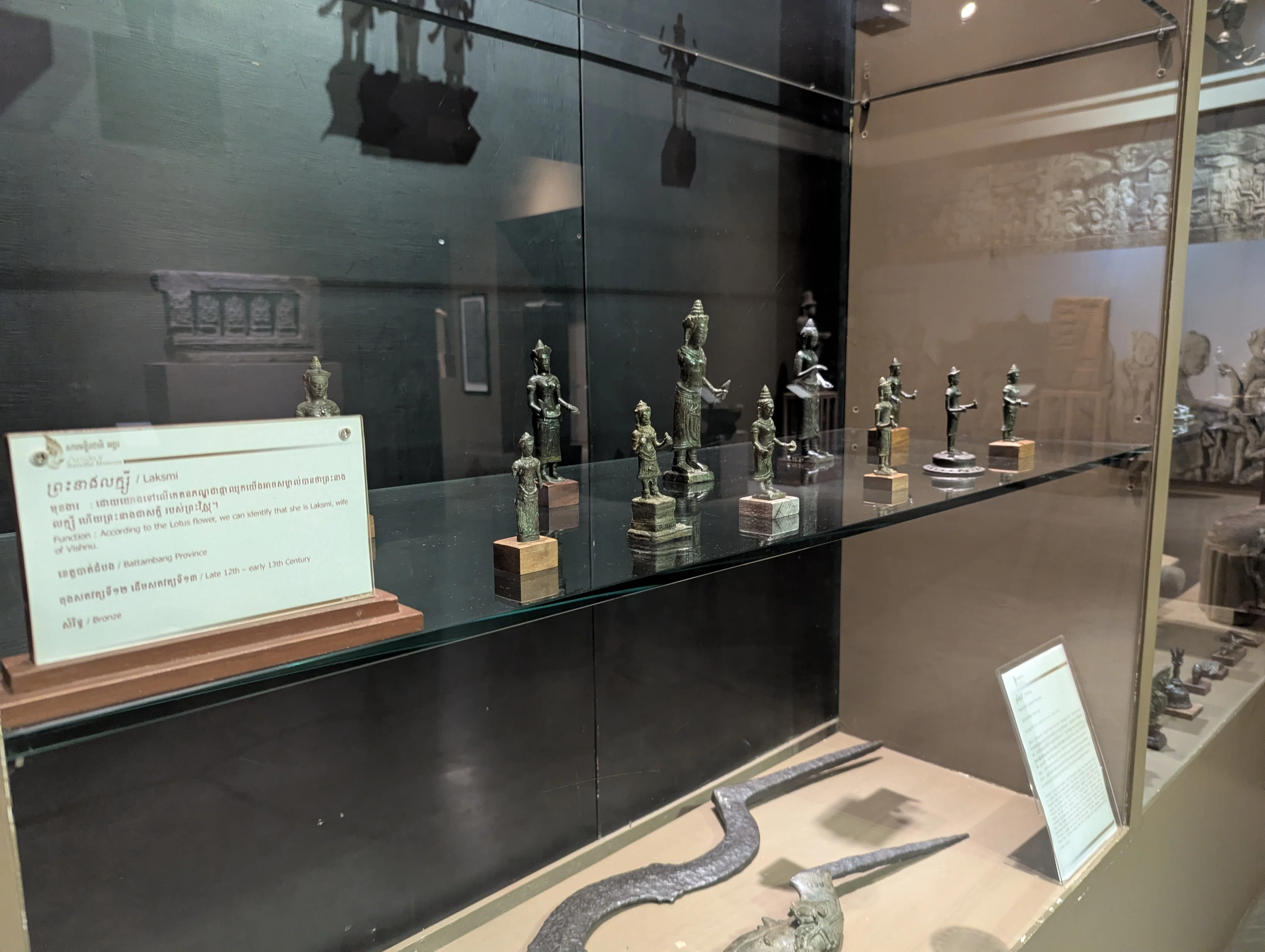
Before entering the main galleries, visitors watch a short presentation explaining the rise of the Khmer Empire. This introduction helps visitors understand how powerful Khmer kings organized their society, built vast irrigation systems, and constructed monumental temples.
The museum explains how religion, politics, and engineering combined to create the Angkor civilization that once dominated much of mainland Southeast Asia.
Exploring the Museum Galleries
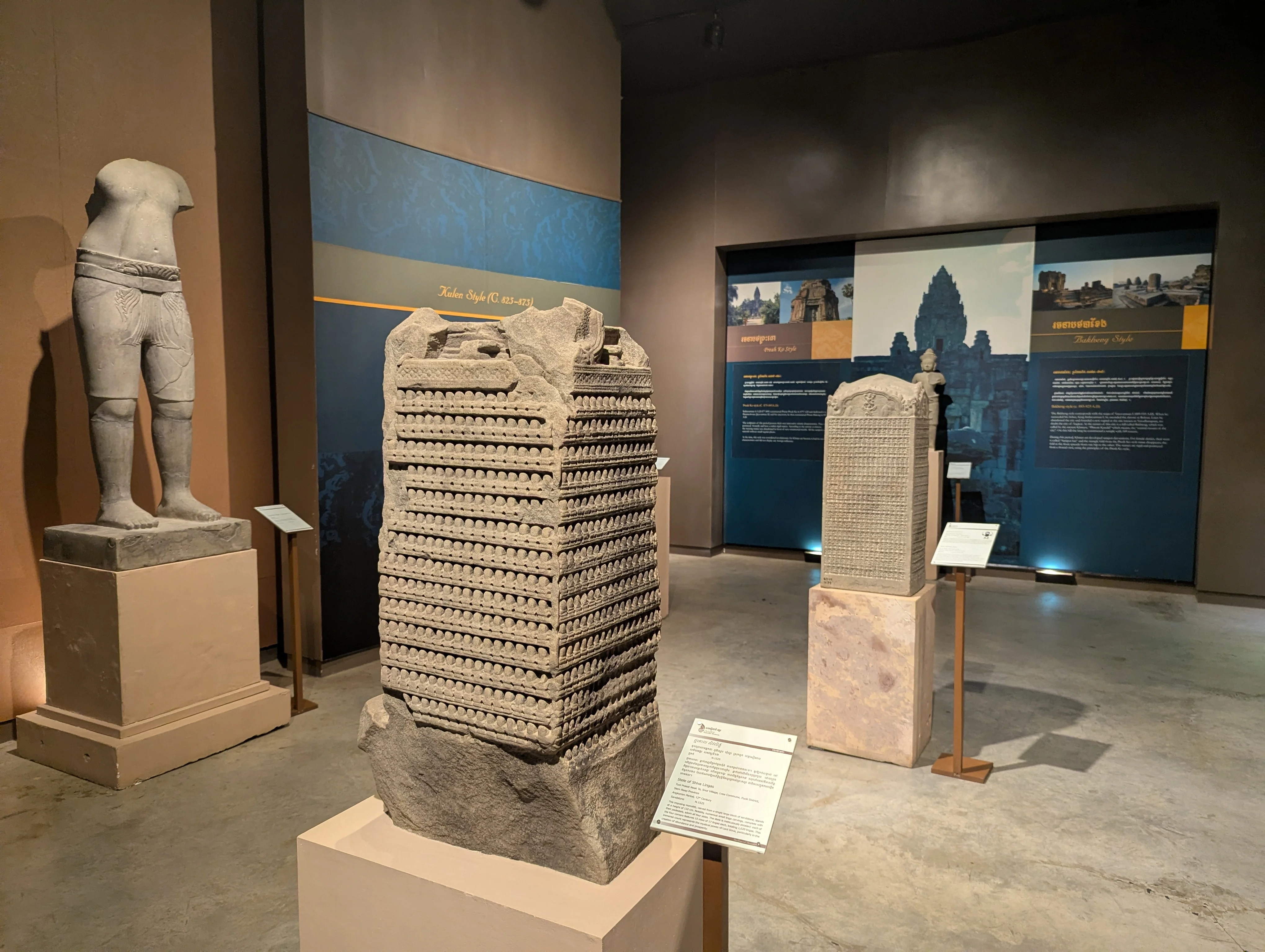
The museum contains eight galleries arranged in a chronological path through Khmer history. Visitors move through each room in sequence, learning about different aspects of Angkorian culture.
Topics include religion, architecture, royal history, ancient clothing, inscriptions, and daily life.
Audio guides are available in several languages and help explain the significance of the objects on display.
The Gallery of 1,000 Buddha
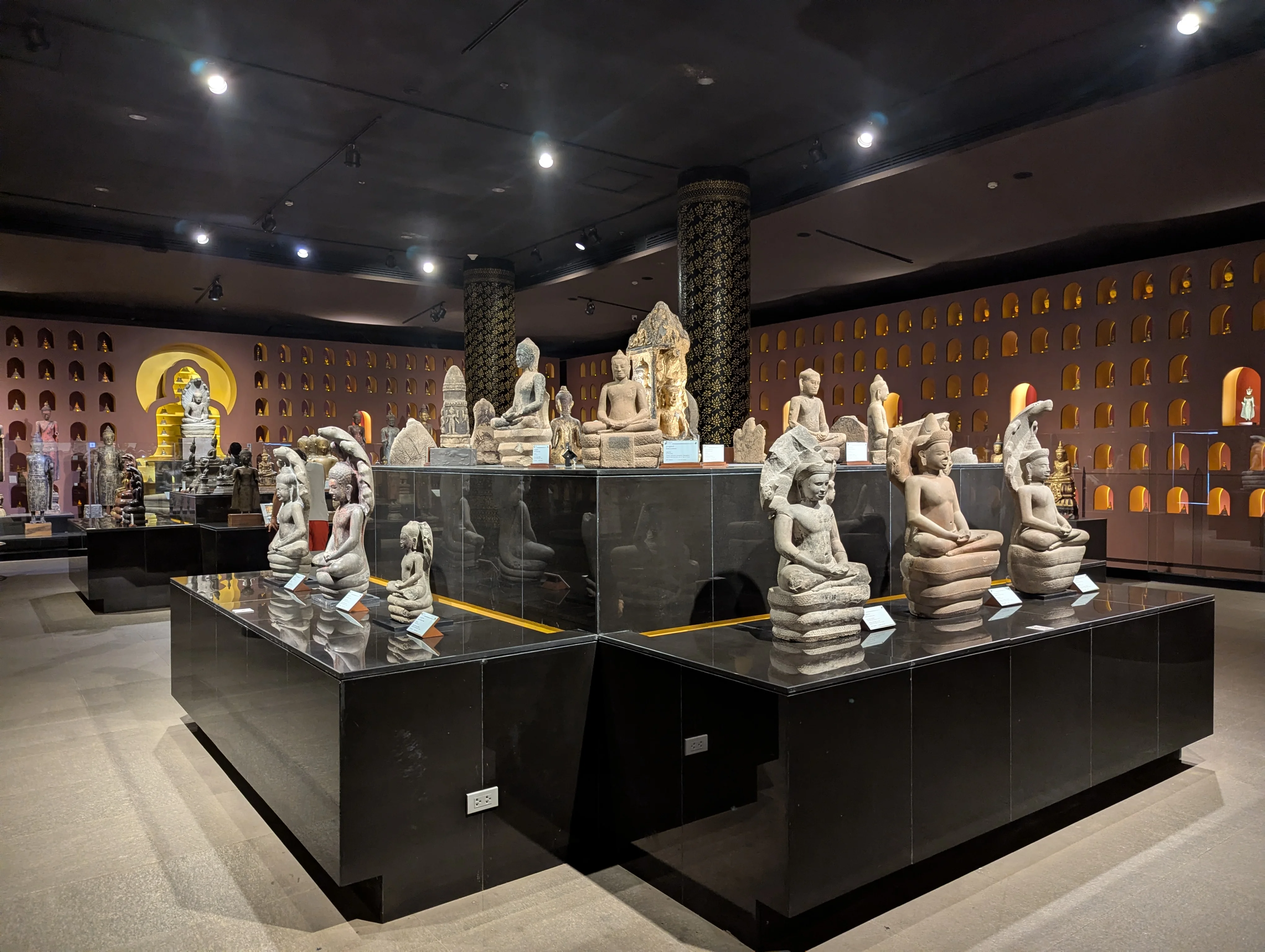
One of the most memorable exhibits is the Gallery of 1,000 Buddha. This room contains a large collection of Buddha statues representing different artistic styles and historical periods.
The gallery highlights the importance of Buddhism in Cambodian culture and shows how religious art evolved through the centuries.
The Great Khmer Kings
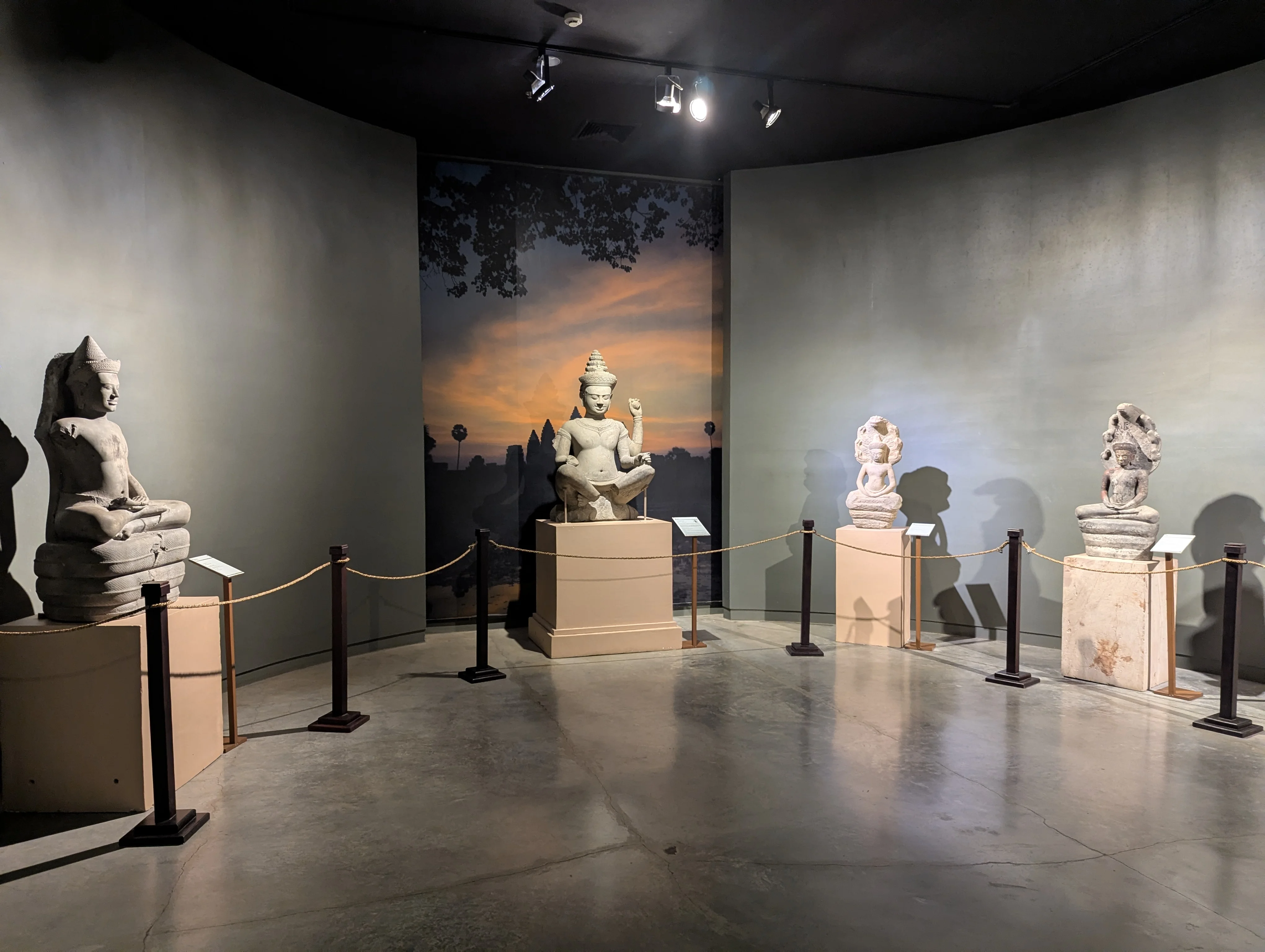
The museum also features exhibits dedicated to some of the most famous Khmer kings.
Among them are Jayavarman II, who helped establish the Khmer Empire; Suryavarman II, who built Angkor Wat; and Jayavarman VII, who constructed Angkor Thom.
These exhibits explain how royal power, religion, and monumental architecture were closely connected during the Angkor period.
Angkor Architecture and Engineering
Another gallery focuses on the architectural achievements of Angkor.
Models and diagrams show how massive temples such as Angkor Wat were designed and constructed, as well as how irrigation canals and reservoirs supported large populations.
The exhibits reveal the extraordinary engineering knowledge possessed by the ancient Khmer builders.
Artifacts and Sculptures
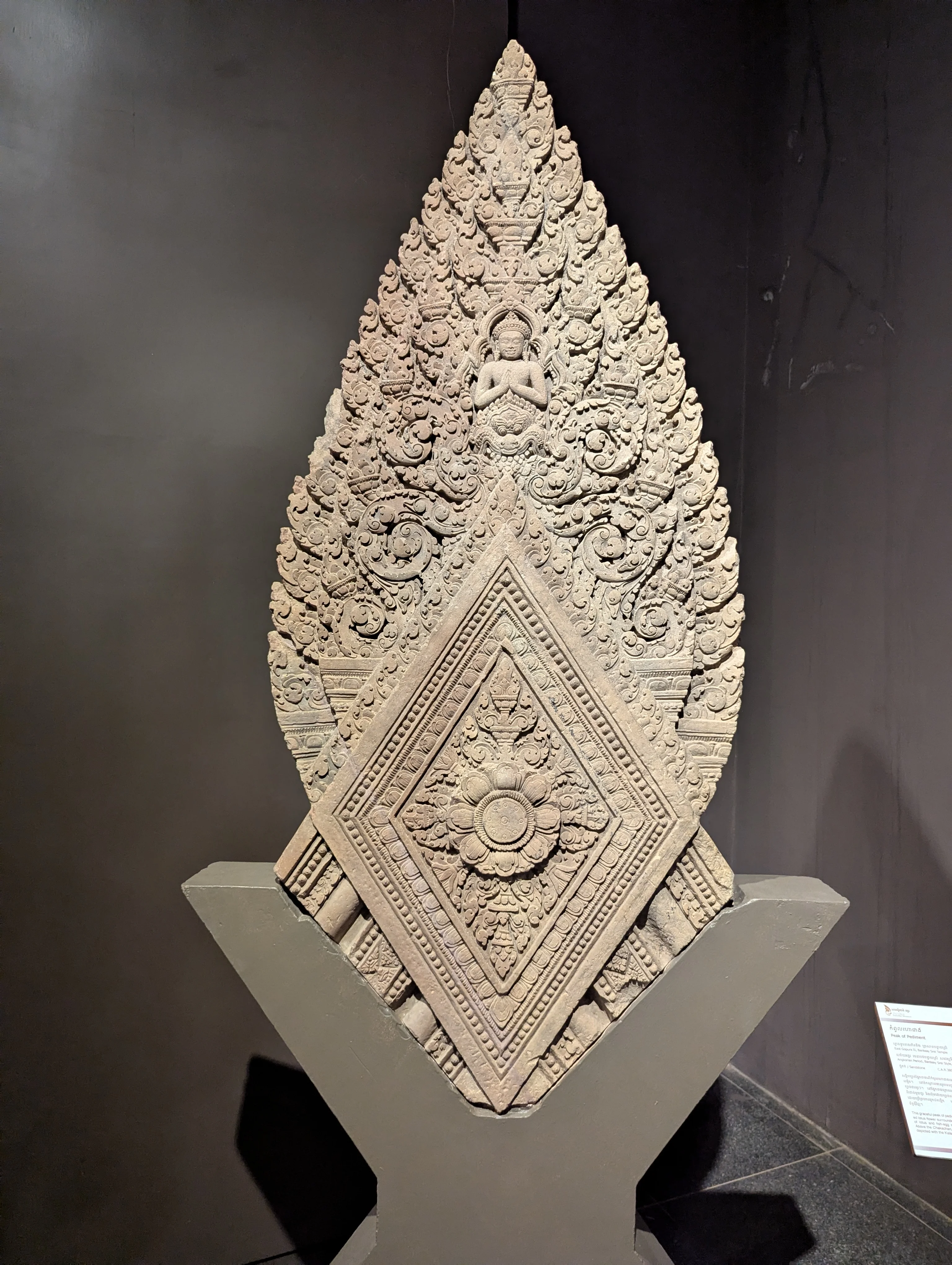
The museum displays a wide variety of artifacts including stone sculptures, religious statues, inscriptions, jewelry, and ceremonial objects.
Many pieces were recovered from temples around Angkor and are now preserved safely inside the museum.
These artifacts provide valuable insight into Khmer religion, art, and craftsmanship.
Visitor Experience
The Angkor National Museum is fully air-conditioned and designed to guide visitors through a comfortable and educational experience.
Most visitors spend one to two hours exploring the galleries, although history enthusiasts may stay longer to study the exhibits in detail.
Many travelers visit the museum before touring the temples so they can better understand what they will see later at Angkor.
Where the Angkor National Museum Is Located
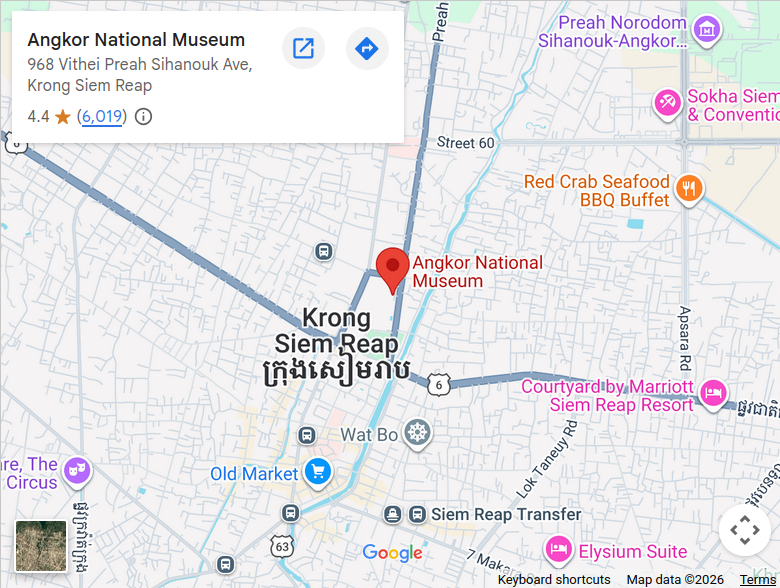
Angkor National Museum
968 Vithei Preah Sihanouk Avenue
Siem Reap, Cambodia
Opening Hours
Daily: 8:30 AM – 6:00 PM
Admission
- Adults: about $12
- Audio Guide: about $5
The museum is located about two kilometers from the center of Siem Reap and can easily be reached by tuk-tuk, bicycle, or taxi.
Why Visit the Angkor National Museum?
The Angkor National Museum offers visitors a deeper understanding of the temples and history of the Angkor Empire. By learning about Khmer religion, royal power, architecture, and art before visiting the temples, travelers gain valuable context that makes the Angkor sites far more meaningful.
For many visitors, the museum serves as the perfect introduction to Angkor and provides a fascinating look into one of Southeast Asia’s most remarkable civilizations.