 Siem Reap Inside Asia
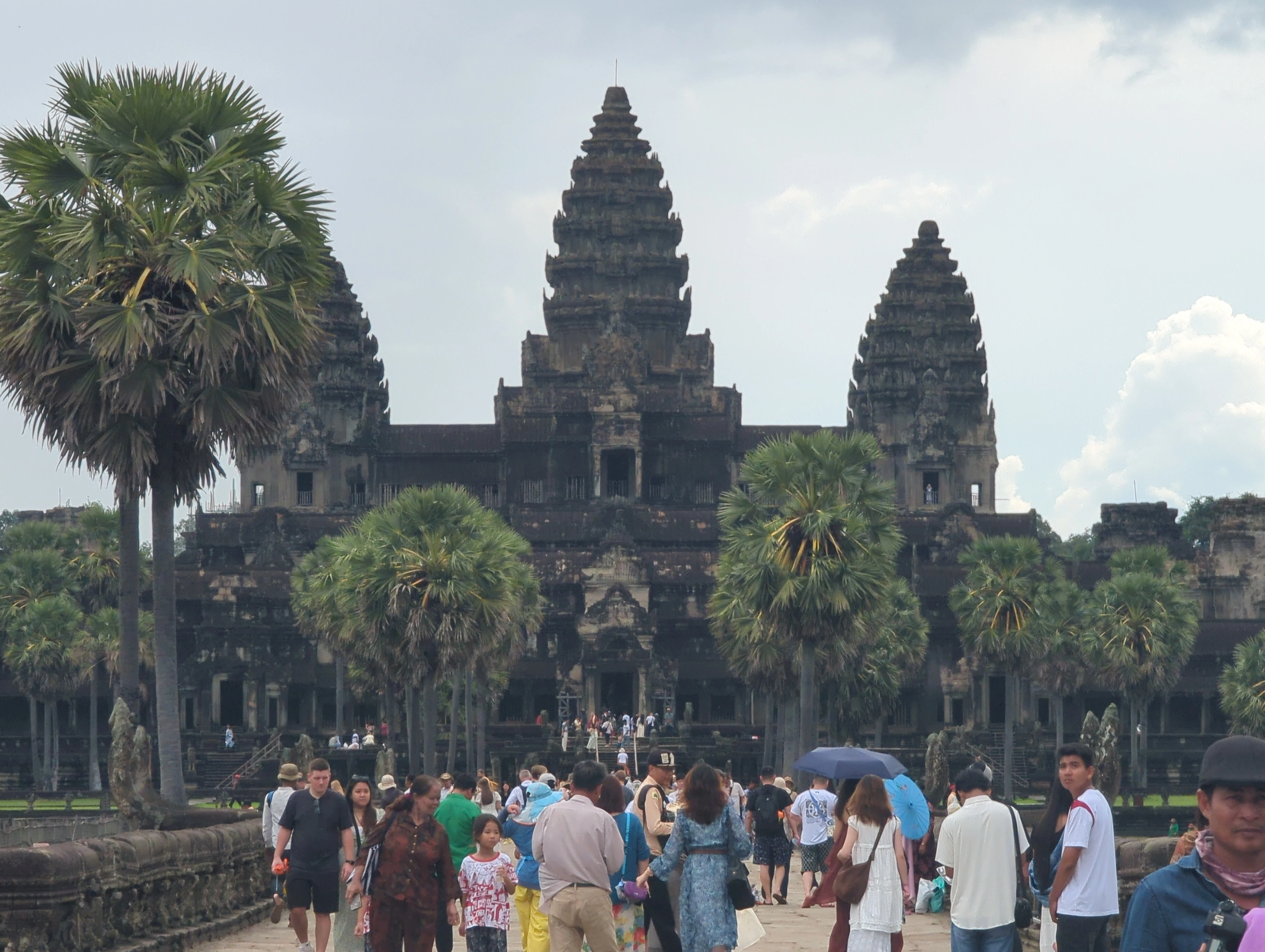
Angkor Wat is the most famous temple in Cambodia and one of the most recognizable ancient monuments in the world. Located just outside Siem Reap, the vast complex was built in the early 12th century during the height of the Khmer Empire. Today it stands as a powerful symbol of Cambodian identity and even appears on the country’s national flag.
Originally constructed as a Hindu temple dedicated to Vishnu, Angkor Wat gradually transformed into a Buddhist temple and remains an active religious site today. Its towering lotus-shaped spires, immense stone galleries, and intricate carvings make it one of the greatest architectural achievements in Southeast Asia.
For many travelers, visiting Angkor Wat is the highlight of any trip to Cambodia. The temple’s scale, artistry, and historical significance create an unforgettable experience for anyone exploring the Angkor Archaeological Park.
Topics In This Guide
- The History of Angkor Wat
- The Approach to the Temple
- Intricate Stone Carvings
- Bas-Reliefs and Ancient Stories
- Exploring the Interior
- Climbing to the Upper Levels
- The Temple Courtyards
- Beyond Angkor Wat
- Wildlife Around Angkor Wat
- Tickets, Opening Hours, and Best Time to Visit
- Best Time to Visit Angkor Wat
- Where Angkor Wat Is Located
The History of Angkor Wat
Angkor Wat was built during the reign of King Suryavarman II in the early 12th century. At that time the Khmer Empire controlled much of mainland Southeast Asia, and Angkor served as its powerful capital.
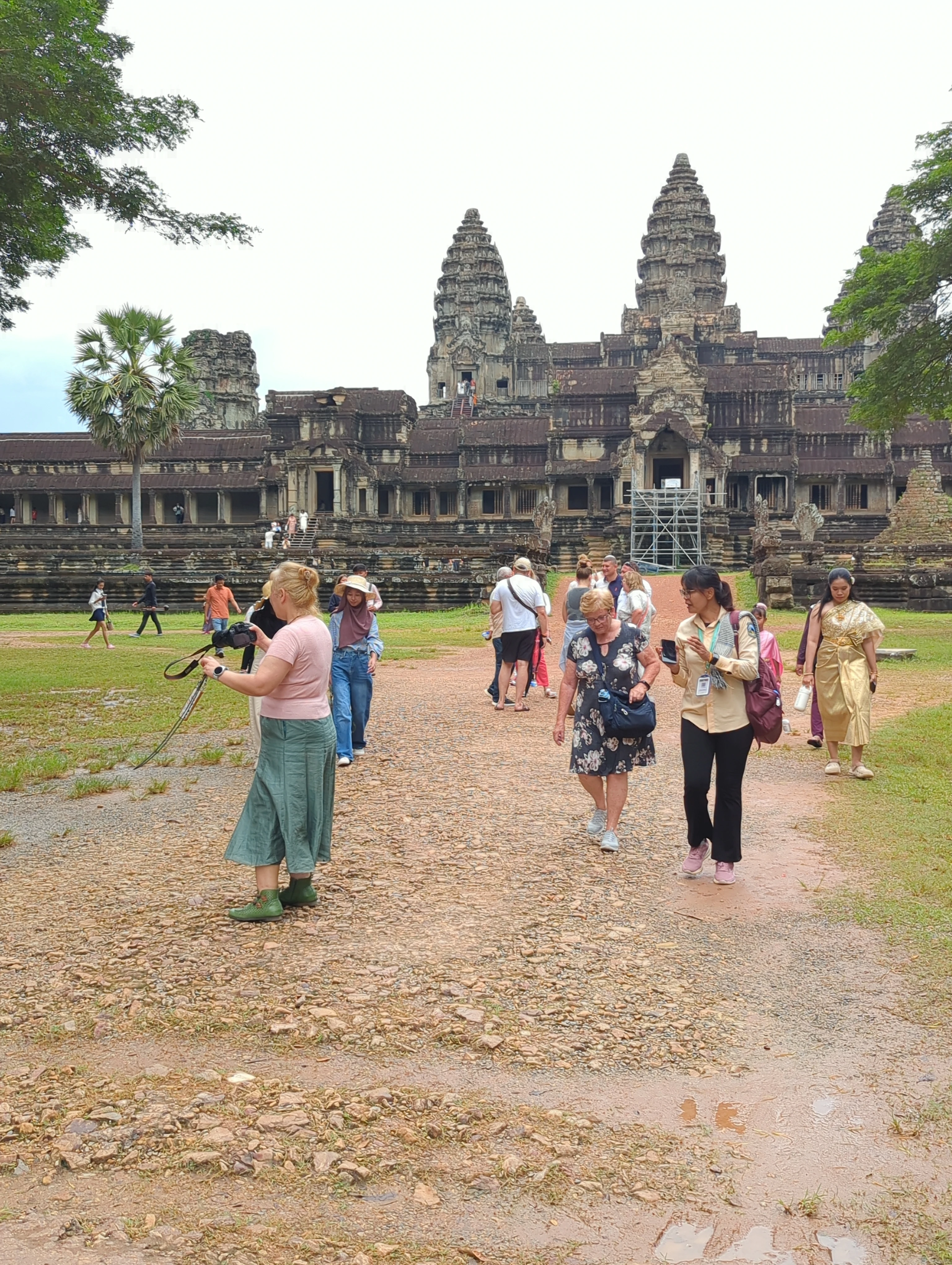
Unlike many other temples in the Angkor complex, Angkor Wat was designed to face west rather than east. Scholars believe this unusual orientation may relate to its dedication to the Hindu god Vishnu and possibly its role as a royal funerary temple.
After the decline of the Khmer Empire, the temple gradually shifted from Hindu worship to Buddhism. Remarkably, Angkor Wat was never completely abandoned, which helped preserve much of its structure through the centuries.
The Approach to the Temple
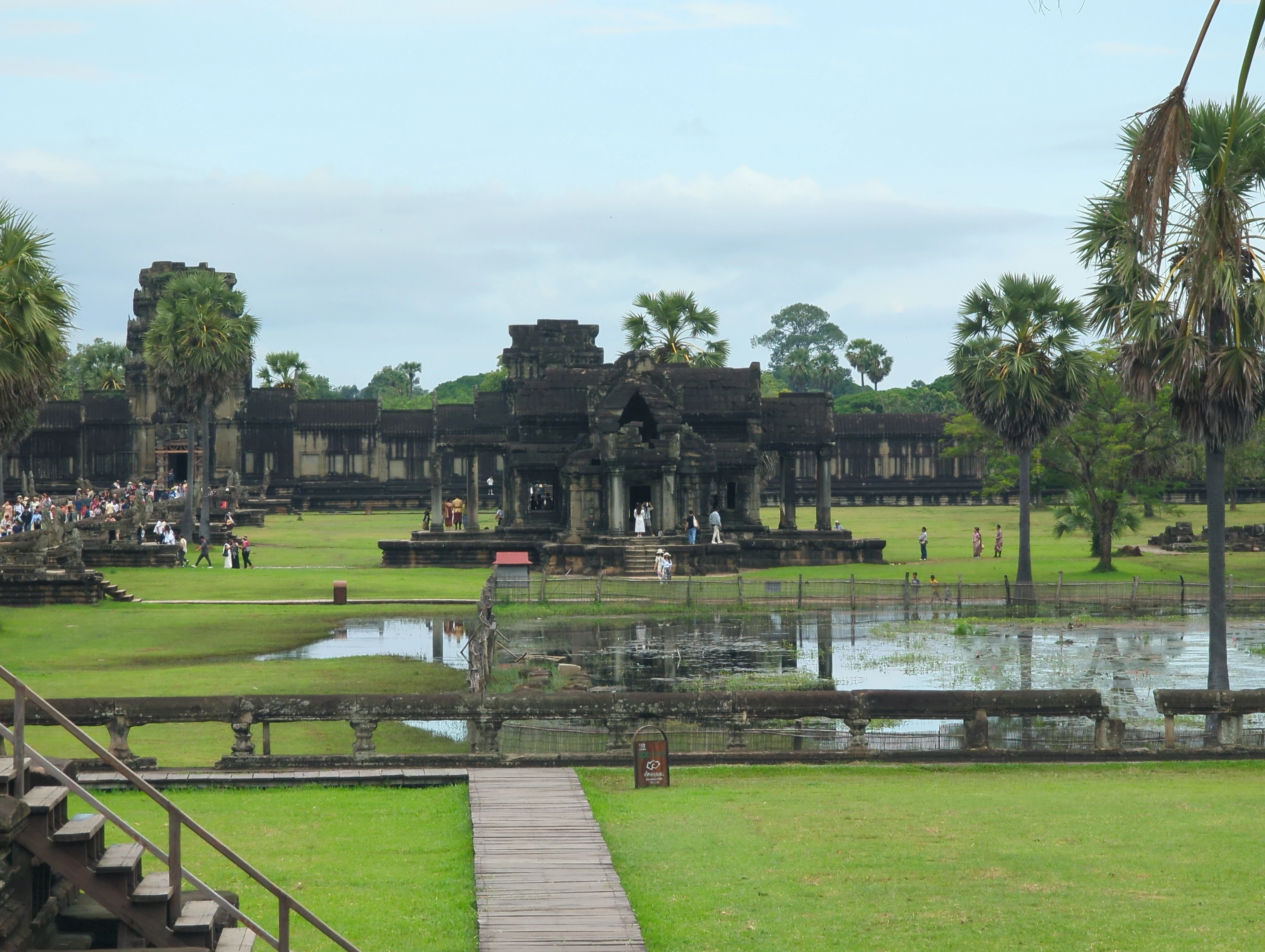
The approach to Angkor Wat is one of the most memorable experiences for visitors. A long stone causeway crosses the massive moat that surrounds the temple complex, gradually revealing the famous towers of the temple ahead.
The moat stretches nearly 200 meters wide and forms an important part of the temple’s symbolic design. In Hindu cosmology, the moat represents the cosmic ocean that surrounds Mount Meru, the mythical center of the universe. The temple itself was designed to represent this sacred mountain, making the entire complex a symbolic model of the Hindu universe.
As visitors walk along the causeway, the five iconic towers of Angkor Wat gradually rise into view above the surrounding landscape. The central tower reaches about 65 meters in height, towering above the other spires and dominating the skyline of the surrounding forest and plains.
This slow reveal is one of the most memorable moments of the visit, as the temple’s immense scale and symmetry become increasingly visible with each step across the causeway.
Intricate Stone Carvings
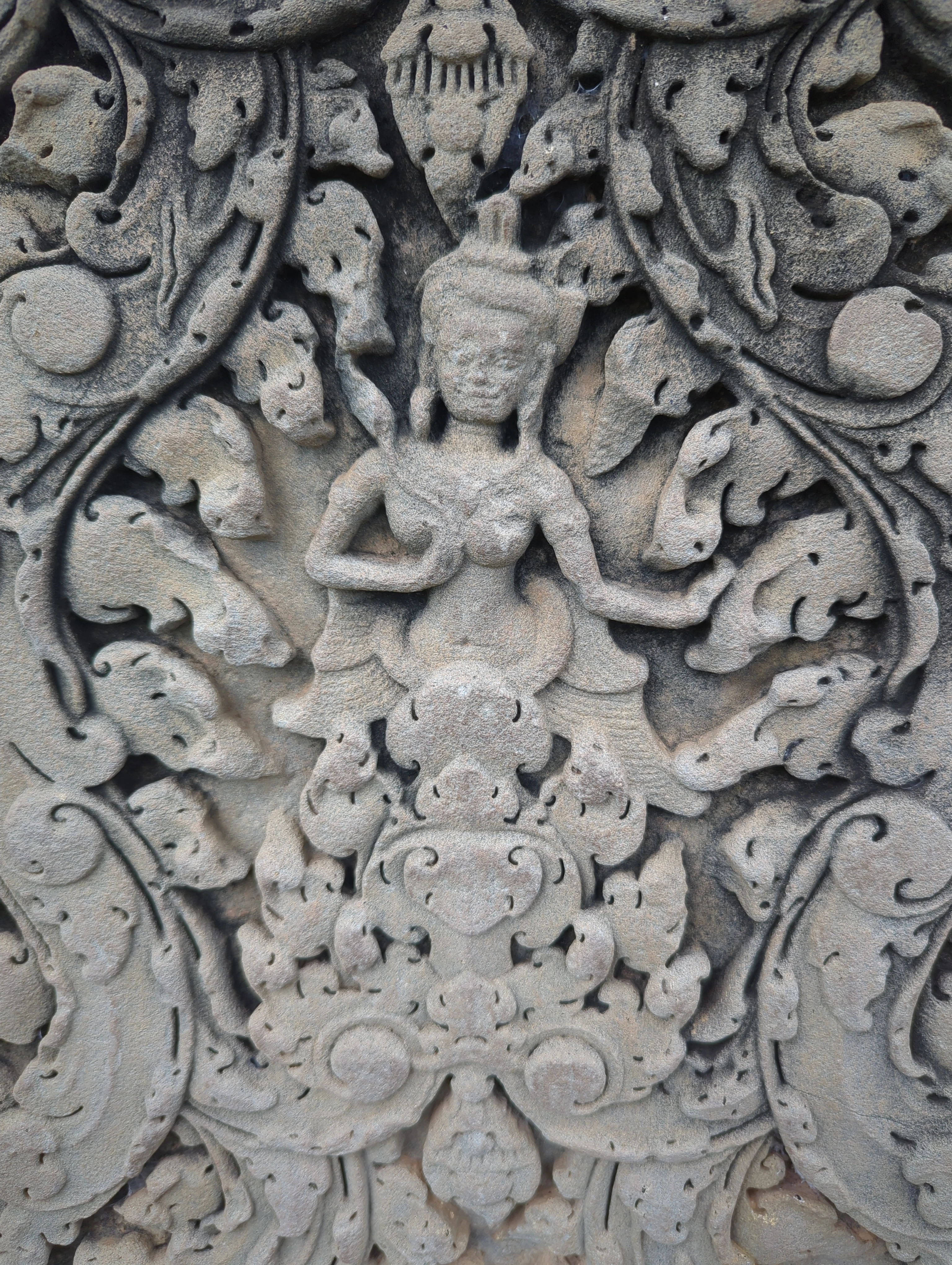
One of the most remarkable features of Angkor Wat is its intricate stone carvings. Thousands of delicate figures decorate the temple walls, including apsaras — celestial dancers from Hindu mythology.
These carvings reveal the remarkable skill of Khmer artisans. Each apsara displays unique hairstyles, jewelry, clothing, and poses, reflecting the extraordinary level of detail achieved by craftsmen more than 800 years ago. Many of the figures appear to be in motion, giving the temple walls a sense of life and rhythm despite being carved entirely from stone.
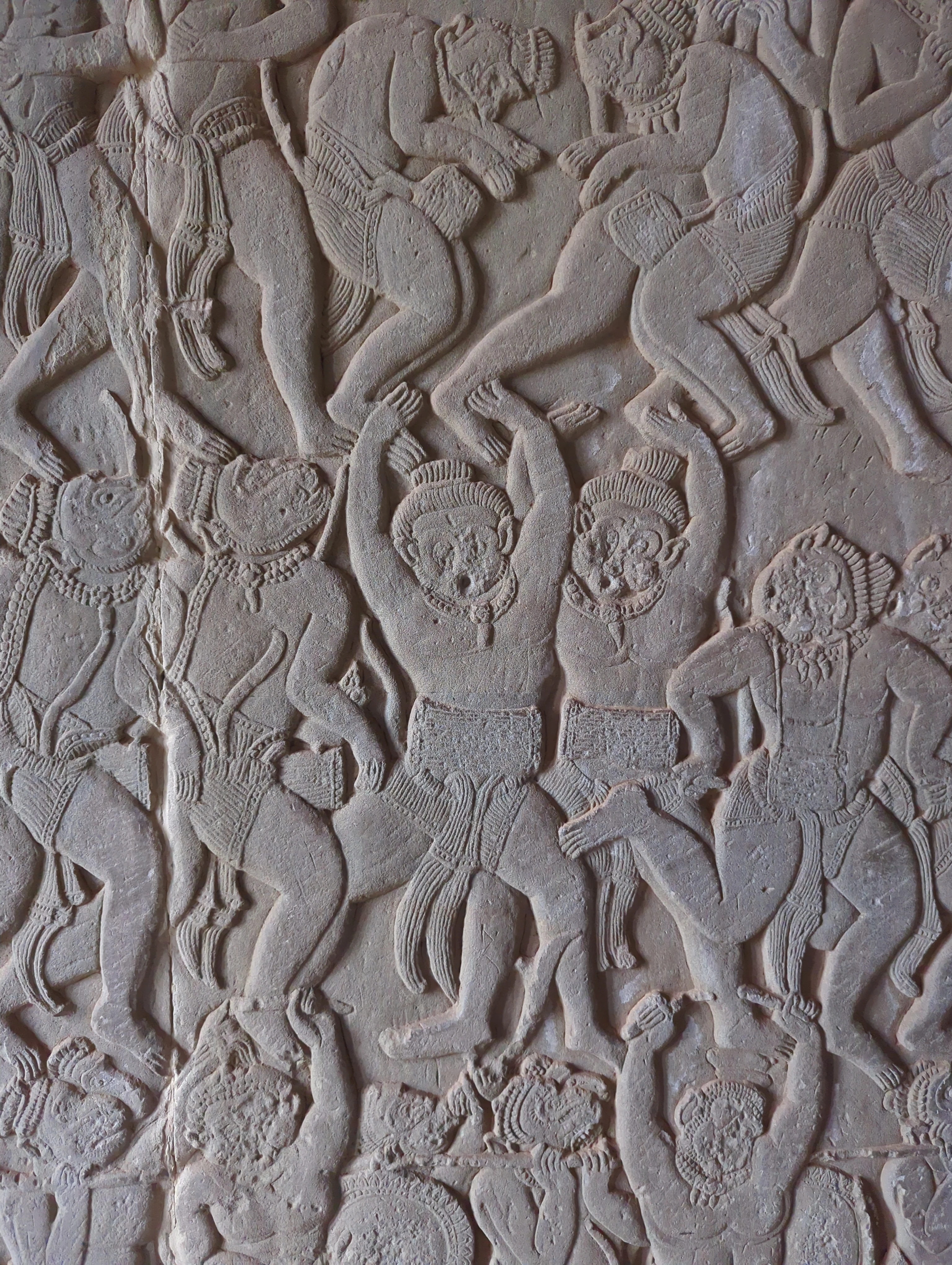
In addition to the apsaras, the temple walls are covered with elaborate decorative patterns and symbolic imagery carved into the sandstone. Floral motifs, mythological figures, and intricate geometric designs appear throughout the galleries, forming a continuous visual narrative across the temple complex.
Bas-Reliefs and Ancient Stories
Angkor Wat contains some of the largest and most detailed bas-relief carvings in the world. These long stone galleries stretch along the temple’s outer walls and illustrate scenes from Hindu epics such as the Ramayana and the Mahabharata.
One of the most famous carvings depicts the “Churning of the Ocean of Milk,” a mythological story in which gods and demons work together to create the elixir of immortality. The dramatic scene extends across a vast wall panel and includes hundreds of finely carved figures pulling a giant serpent as part of the cosmic struggle.
Exploring the Interior
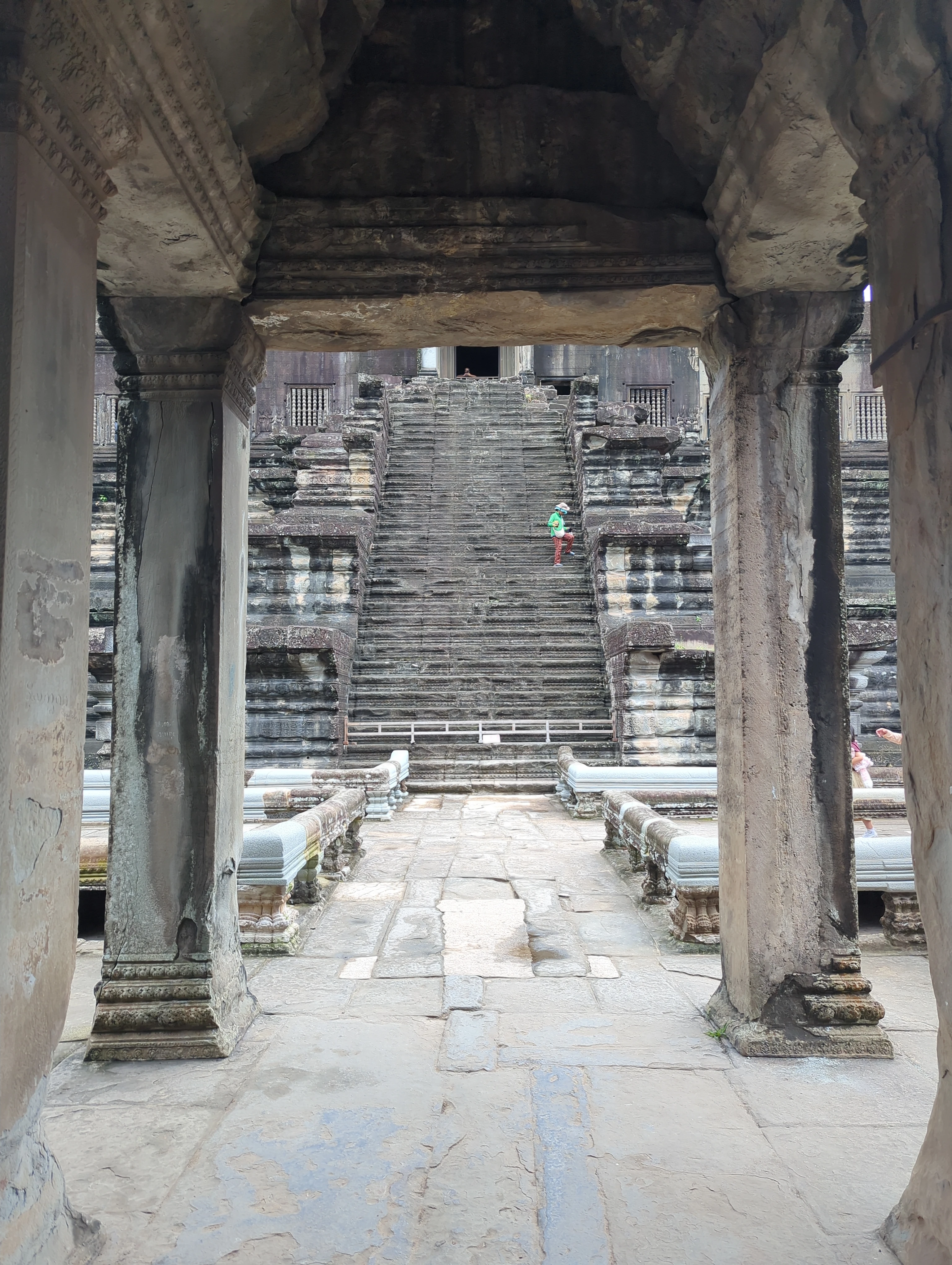
Inside Angkor Wat, visitors walk through long corridors supported by rows of sandstone pillars. These galleries create a powerful sense of scale and symmetry, reflecting the careful planning and architectural precision of the temple’s builders.
The interior passageways connect courtyards, shrines, and staircases that gradually lead toward the upper terraces of the temple. As visitors move through these spaces, the shifting light and shadow across the stone surfaces add to the atmosphere of the ancient complex.
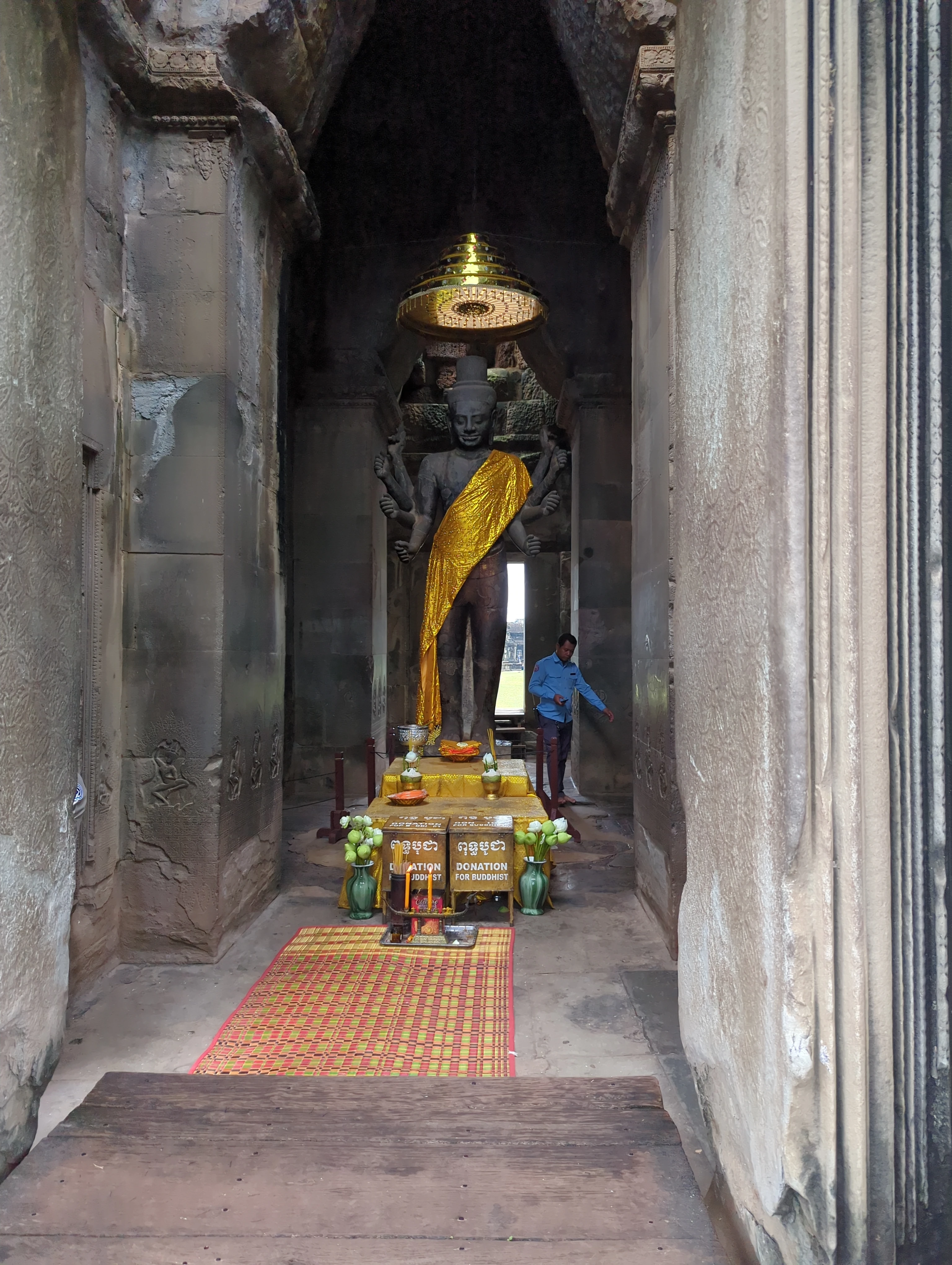
Several interior chambers contain Buddhist statues and small shrines where visitors still leave offerings today. These quiet spaces remind visitors that Angkor Wat is not only a historical monument but also an active religious site where prayer and devotion continue.
Climbing to the Upper Levels
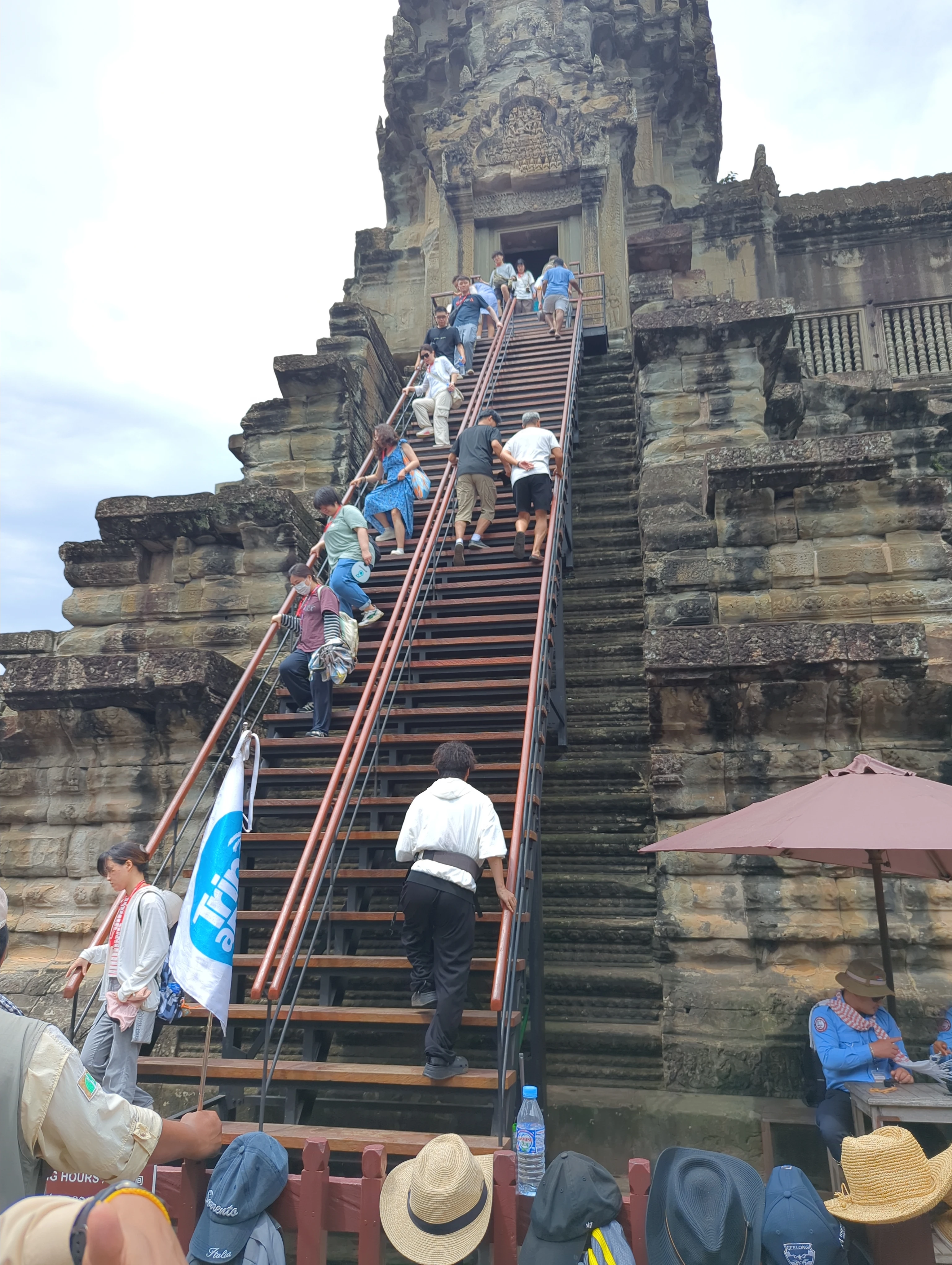
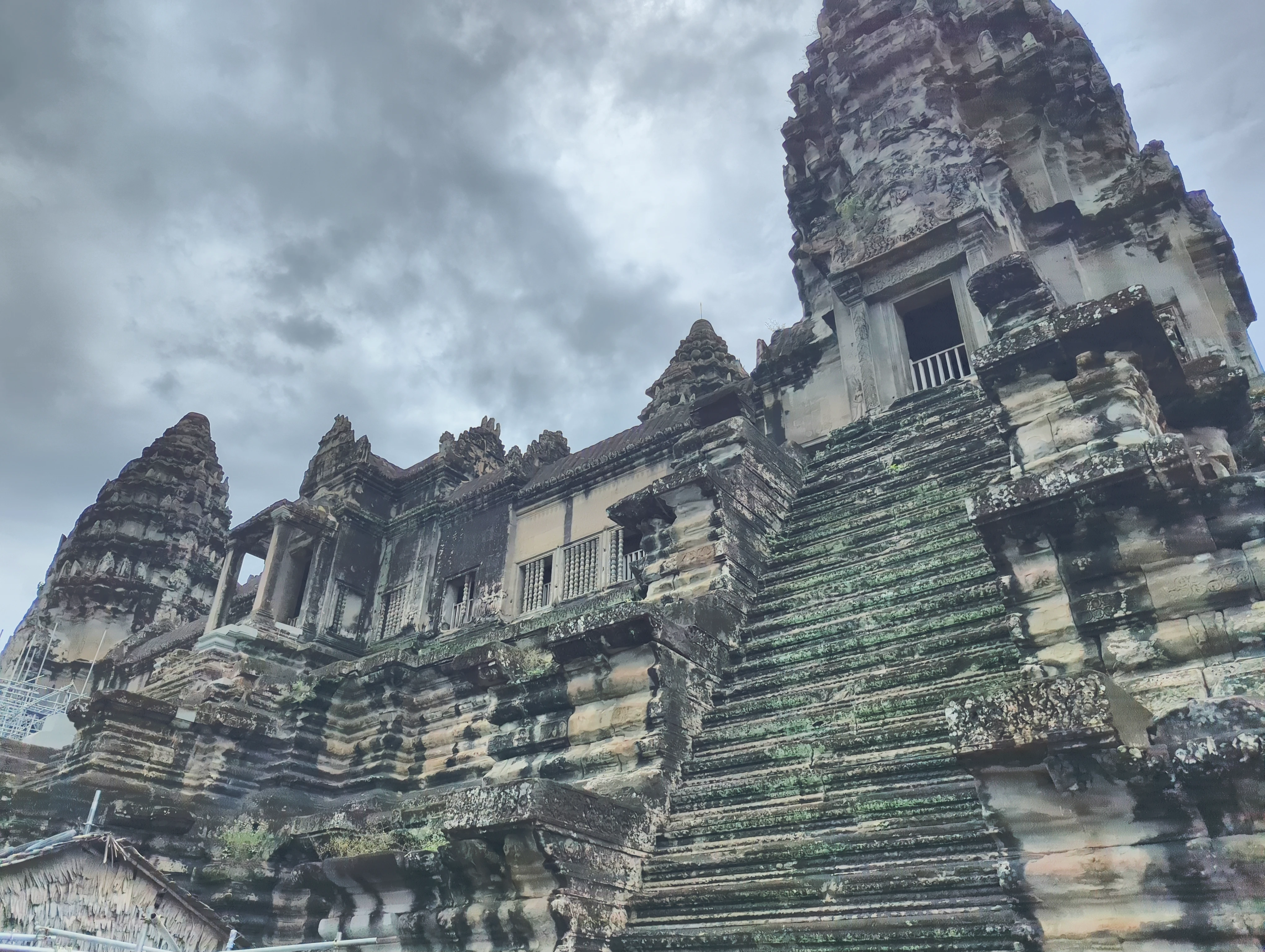
The upper levels of Angkor Wat represent the sacred center of the temple. The staircases leading upward are extremely steep, symbolizing the difficulty of reaching the realm of the gods in Hindu cosmology.
As visitors climb higher, the temple’s layout becomes more compact and elevated, reinforcing the idea that the upper terraces represent the sacred peak of Mount Meru, the mythical center of the universe.
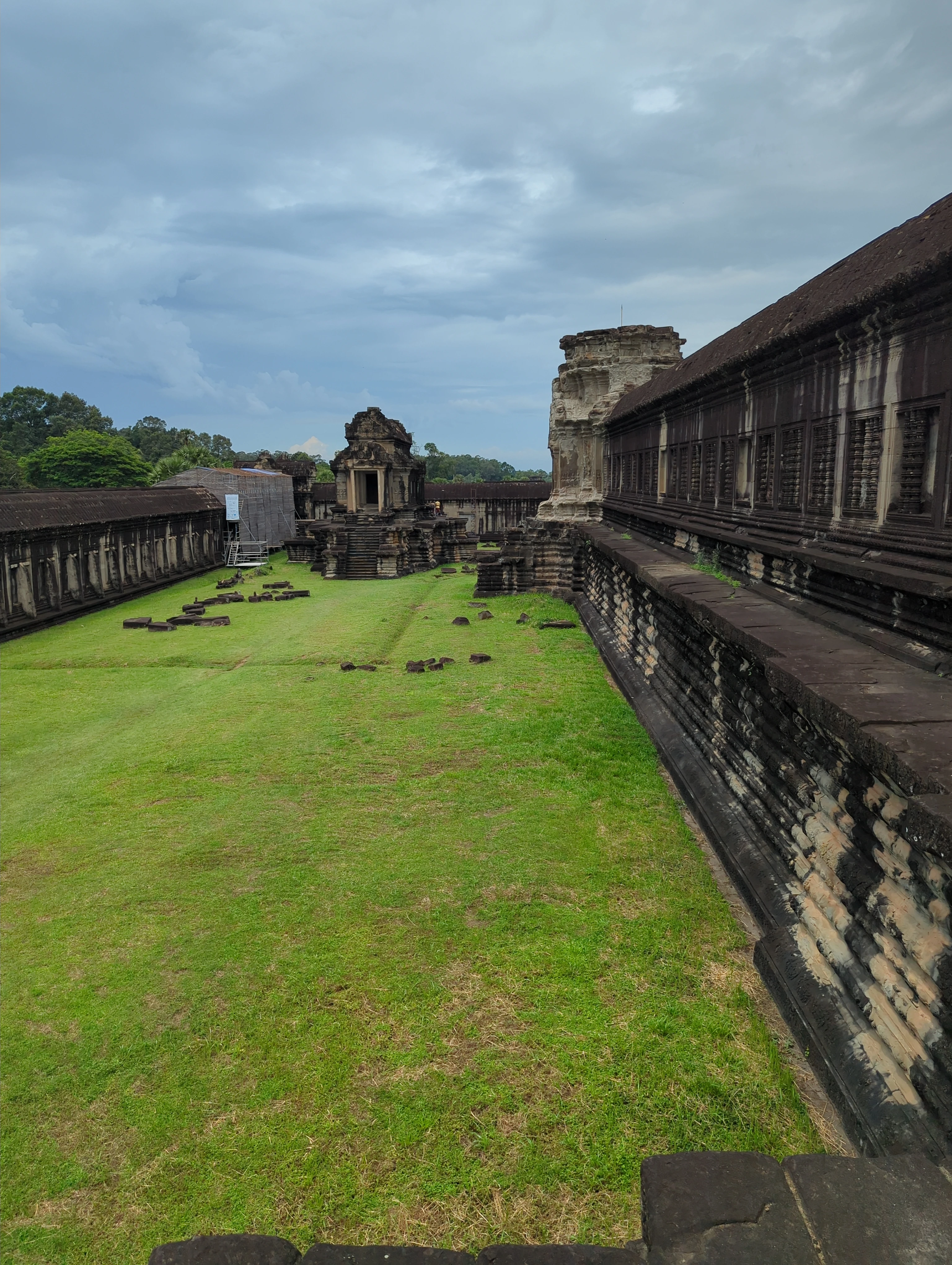
From the upper terraces, visitors can look out across the temple complex and the surrounding jungle landscape. The view highlights the symmetry of Angkor Wat’s layout while also revealing the forests and open plains that surround the ancient site.
The Temple Courtyards
Angkor Wat contains multiple courtyards and open spaces that create a layered architectural layout. Each level represents a step closer to the sacred center of the temple, reflecting the symbolic journey toward the peak of Mount Meru in Hindu cosmology.
As visitors move through these courtyards, the temple gradually rises in height and complexity, guiding them inward toward the central towers.
Beyond Angkor Wat

While Angkor Wat is the most famous temple in the region, it is only one part of the vast Angkor Archaeological Park. This protected area contains dozens of temples and ancient monuments built during the Khmer Empire, forming one of the largest and most important archaeological sites in Southeast Asia.
Wildlife Around Angkor Wat
Although Angkor Wat is famous for its temples and carvings, the surrounding forests of Angkor Archaeological Park are also home to a variety of wildlife. The temple grounds and nearby jungle areas provide habitat for birds, insects, small reptiles, and several species of monkeys that live throughout the Angkor complex.
While the monkeys can be entertaining to watch, visitors should remember that they are wild animals. Keeping a respectful distance and avoiding feeding them helps prevent problems for both the animals and the people visiting the temples.
Tickets, Opening Hours, and Best Time to Visit
Angkor Pass Ticket Prices
- 1-Day Pass: $37 USD
- 3-Day Pass: $62 USD
- 7-Day Pass: $72 USD
Opening Hours
Angkor Wat is typically open daily from 5:00 AM to 5:30 PM.
Best Time to Visit Angkor Wat
The most popular time to visit Angkor Wat is at sunrise.
The cooler months from November through February are generally considered the best time to visit Siem Reap.
Where Angkor Wat Is Located
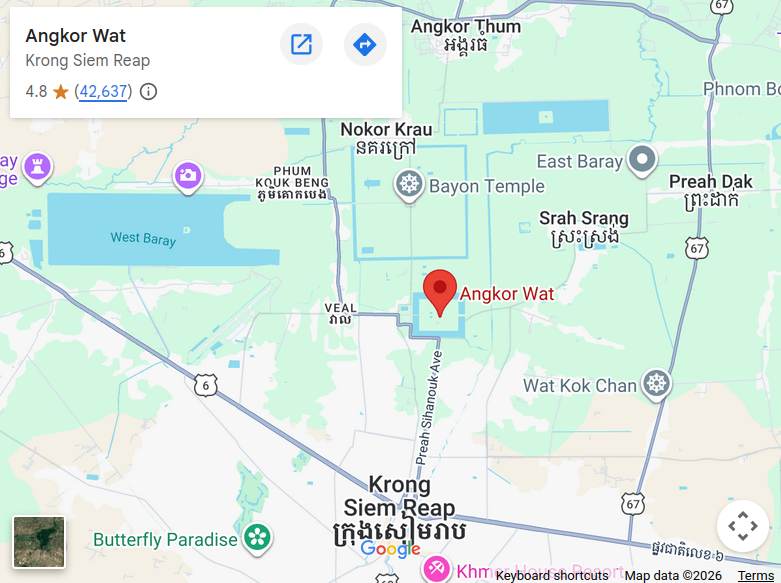
Angkor Wat
Angkor Archaeological Park
Krong Siem Reap, Cambodia
Angkor Wat is located about 6 kilometers (4 miles) north of Siem Reap.