 Siem Reap Inside Asia
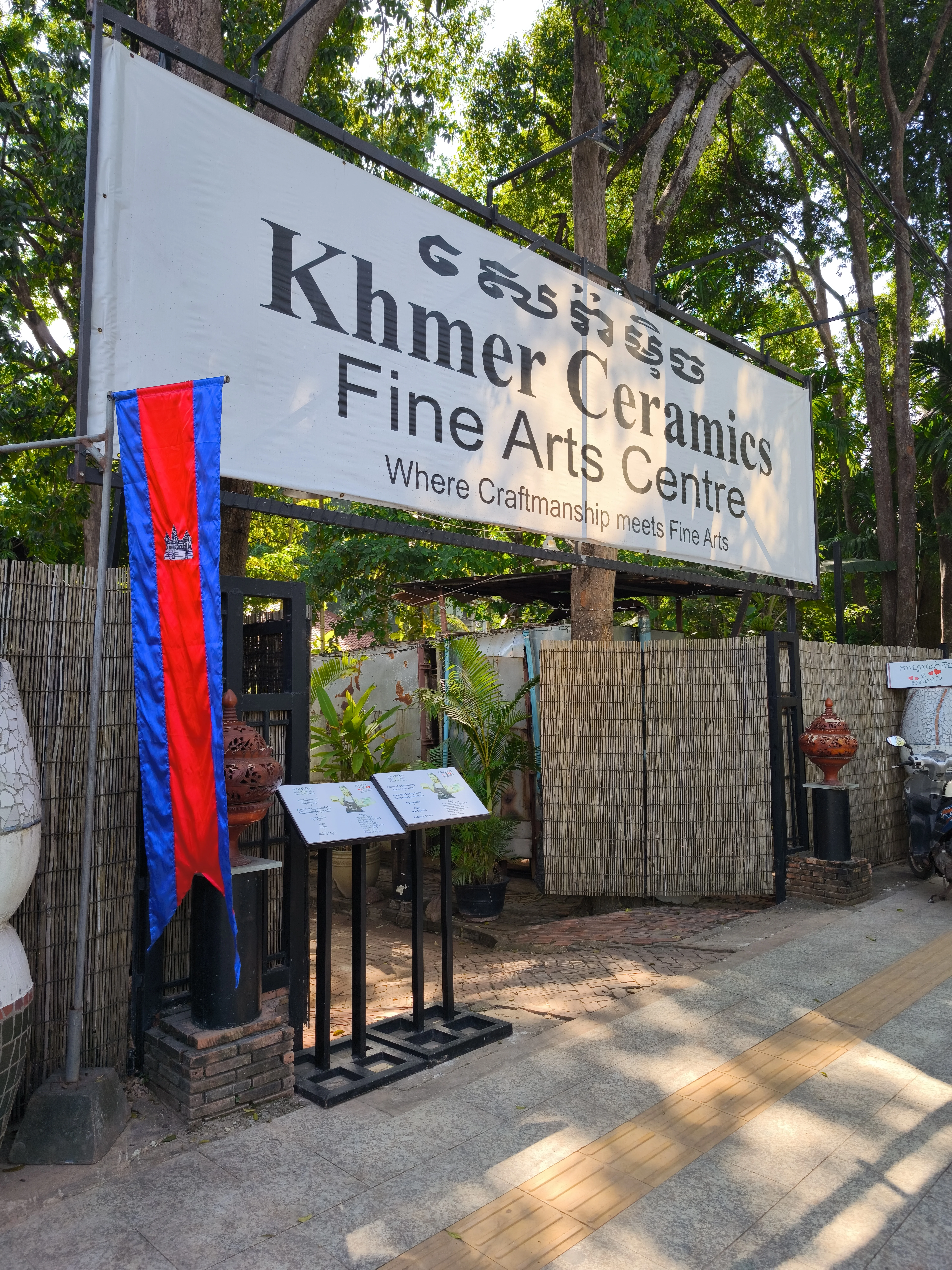
Siem Reap is famous for the temples of Angkor, but beyond the ancient stone monuments lies a vibrant, creative culture that many visitors never discover. One of the best places to experience this side of Cambodia is the Khmer Ceramics Fine Arts Centre, a working ceramics studio where clay from Cambodian soil is transformed into handcrafted pottery.
Visitors can walk through the production workshop, watch artisans shape and carve clay, and learn how ceramics are fired at extremely high temperatures.
Topics In This Guide
- What Is the Khmer Ceramics Fine Art Centre?
- Where the Clay Comes From
- Understanding the Stages of Clay
- Molding and Shaping the Pottery
- Hand Finishing and Carving
- Firing the Kiln
- Glazing: How Color Appears
- Pottery Classes for Visitors
- Studio Membership for Residents
- The Gift Shop
- A Social Enterprise
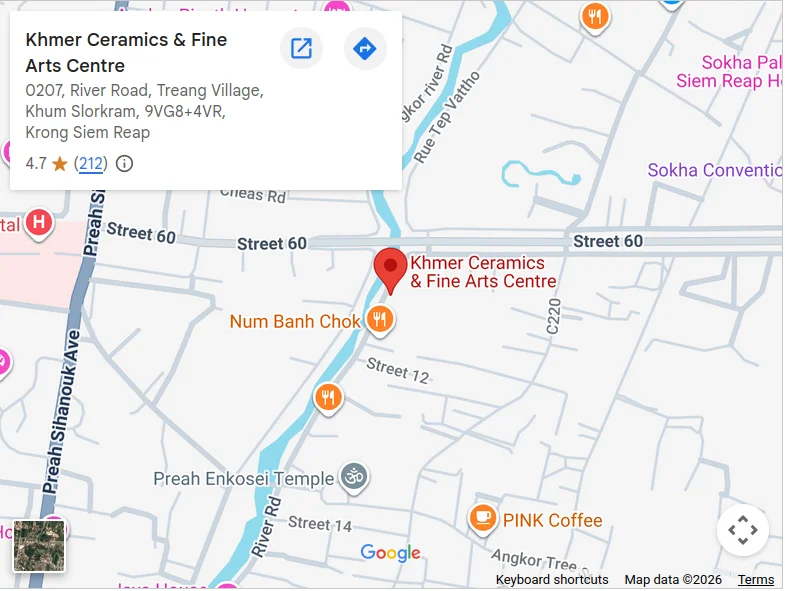
- Where the Khmer Ceramics Fine Art Centre Is Located
What Is the Khmer Ceramics Fine Art Centre?
The Khmer Ceramics Fine Art Centre is both a working ceramics factory, a creative studio, and a community of enthusiastic people. The centre produces handmade stoneware, runs pottery classes for visitors, and supports local artisans through a social enterprise model.
Unlike many souvenir shops in Siem Reap, this is not just a place to buy finished products. Visitors can see the entire production process on site, from raw clay preparation to finished glazed ceramics. The studio also offers free tours of the workshop.
Guests arriving for pottery classes or simply exploring the area are welcomed with a complimentary drink and given a private tour of the facilities.
Where the Clay Comes From
Every ceramic piece begins with clay sourced locally in Cambodia. When the clay arrives at the workshop, it still contains small rocks and debris collected from rural soil. The clay is mixed with water onsite to create a slurry (thick liquid mixture) and then filtered to remove impurities. It is then compressed by machine into dense blocks that potters can shape by hand.
Most of the clay used here is yellow Cambodian clay, although red and white varieties are sometimes available.
Understanding the Stages of Clay
Ceramics involves several stages that determine what artists can do with the material. Fresh clay is known as greenware. At this stage, it is soft and flexible, making it ideal for shaping. As the clay dries, it reaches the leather-dry stage, where it becomes firm enough for carving patterns and refining details. However, clay that dries too quickly can crack, so controlling humidity and drying time is important.
Molding and Shaping the Pottery
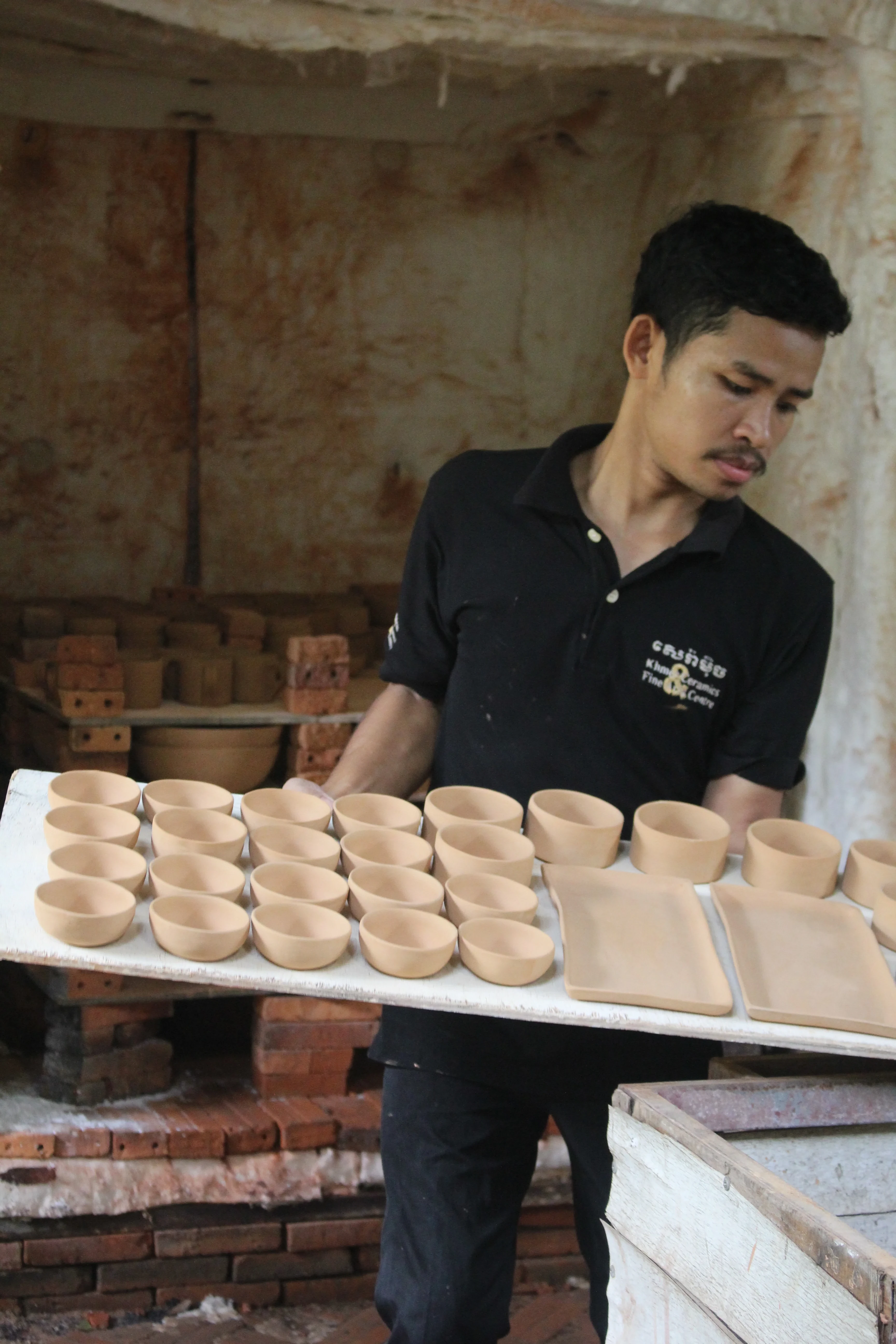
Many ceramic pieces at the centre are produced using plaster molds. Clay is pressed into the molds and allowed to dry.
As the clay dries, it naturally shrinks by about 15 percent, allowing the finished piece to separate easily from the mold. This method makes it possible to produce consistent shapes such as bowls, plates, and mugs while still finishing each item by hand.
Hand Finishing and Carving
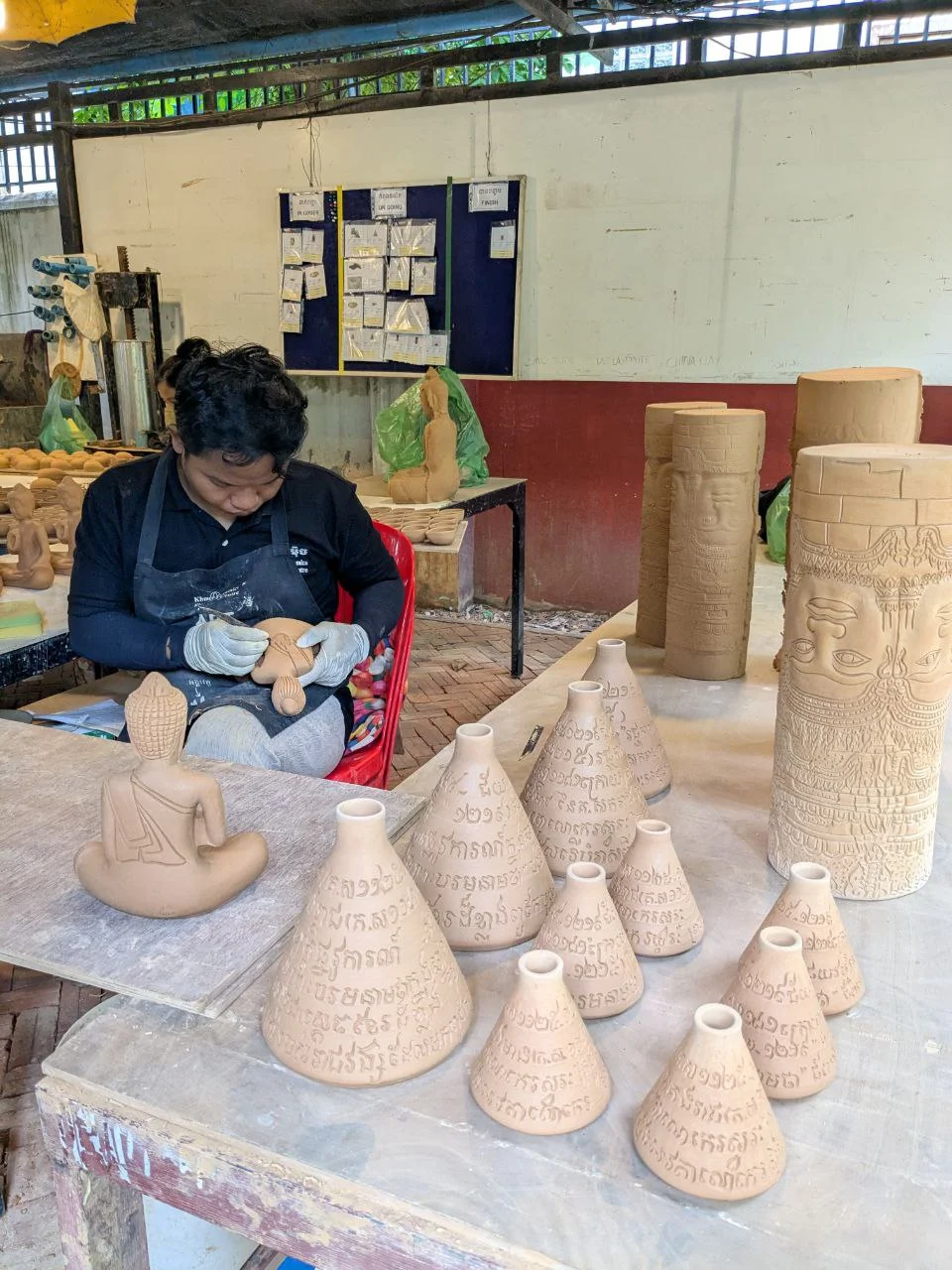
After the molded pieces are removed from their shell, a finishing team carefully inspects each item. They smooth surfaces with sponges, trim edges with small tools, and stamp the studio’s signature mark on the base.
Some items are then carved with decorative designs such as temple motifs, elephants, or custom patterns requested by clients. The workshop often describes its ceramics as “imperfectly perfect” because each piece is shaped and finished by hand.
Firing the Kiln
Once the pottery has dried, it is placed inside a large kiln that heats to approximately 1300°C.
This intense temperature transforms the clay into durable stoneware suitable for everyday use. A full firing cycle lasts around 24 hours as the kiln slowly heats up and then gradually cools. The studio uses gas-powered kilns and fires several batches each week. To help offset the energy required for firing, the centre also supports tree planting initiatives.
Glazing: How Color Appears
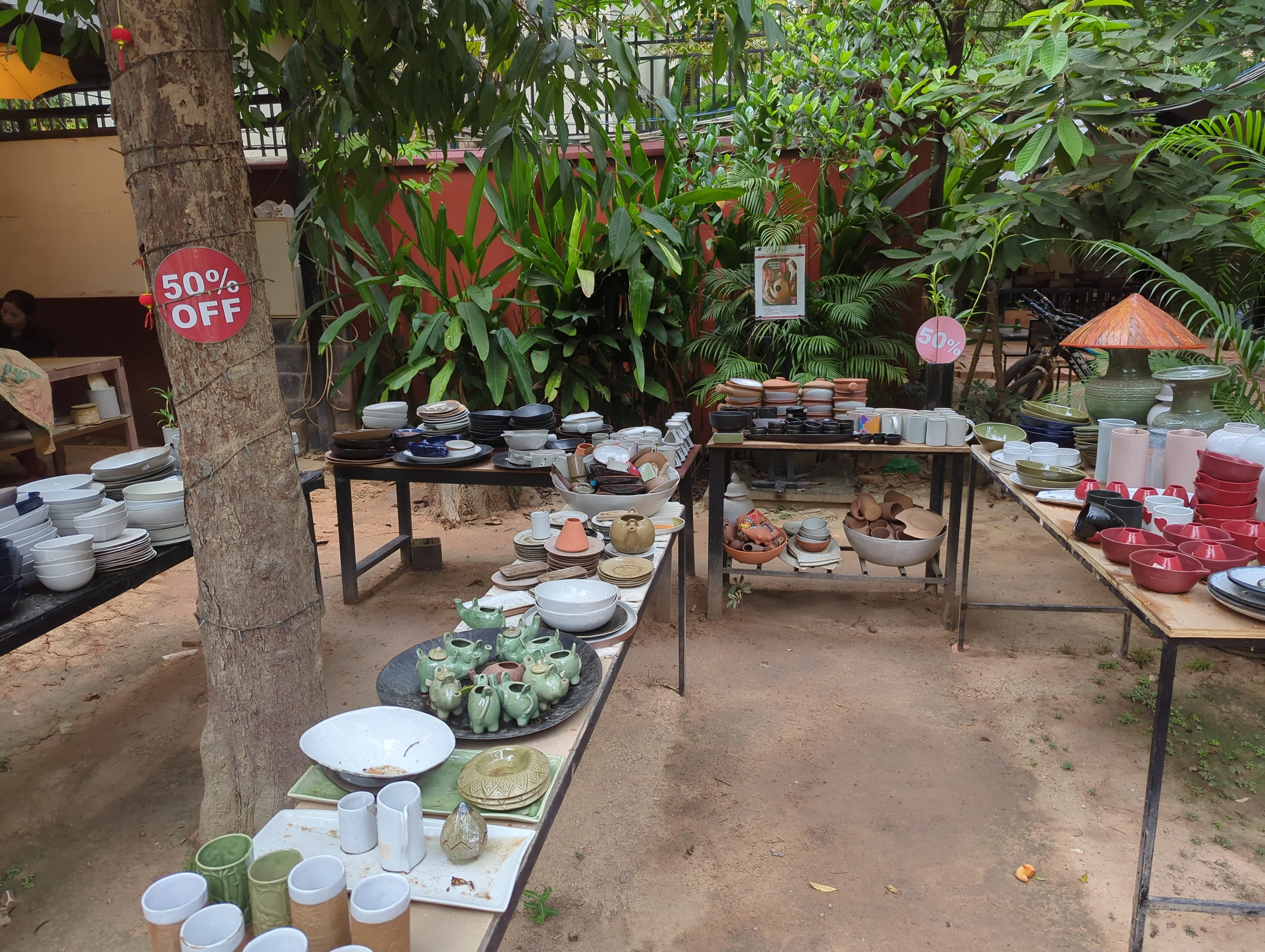
After the first firing, ceramic pieces are glazed and fired again. Glazes are made from powdered minerals mixed with water. Interestingly, the color seen before firing is often very different from the final result. For example, a glaze that appears purple before firing may turn deep black in the kiln.
All glazes used at the studio are lead-free and food safe, making the ceramics suitable for kitchenware and children's use.
Pottery Classes for Visitors
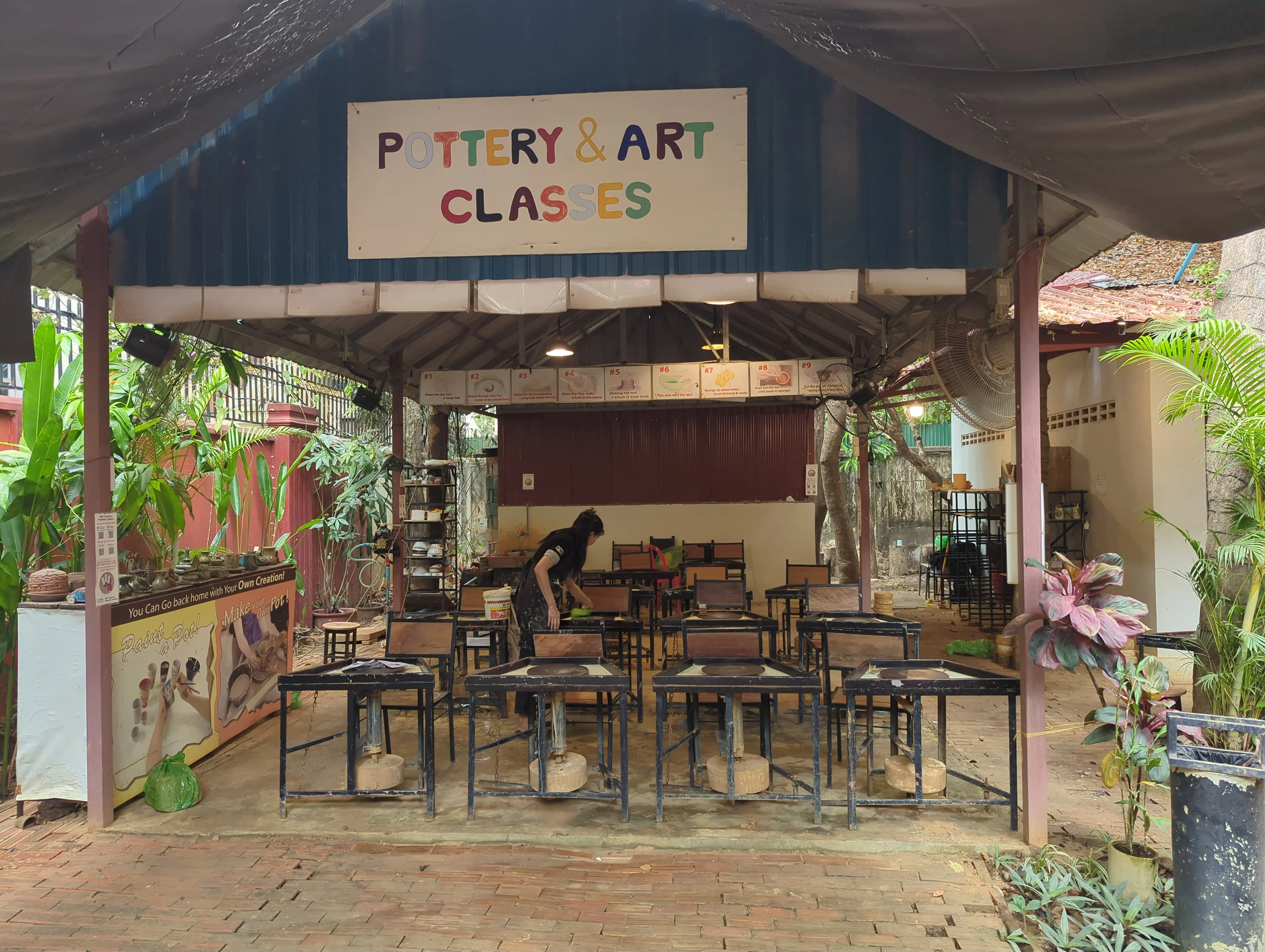
One of the most popular activities at the centre is the pottery class. A typical class costs $25 and lasts roughly two and a half hours. Participants can create up to five pieces during the session and select two final pieces to be fired and taken home.
Additional finished pieces can be kept for about $5 each. Finished pottery can usually be collected within one or two days.
Studio Membership for Residents
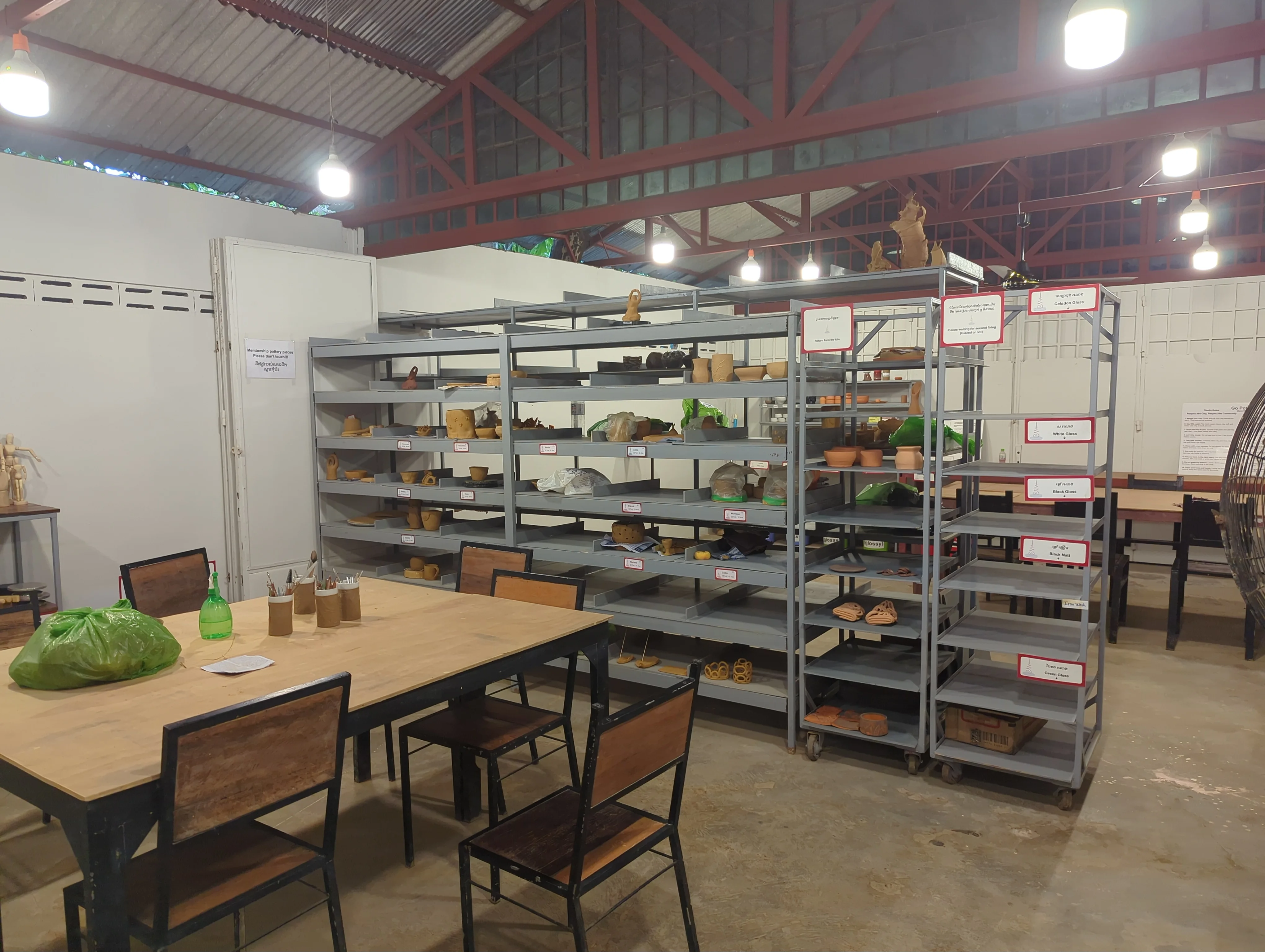
The studio also offers a ceramics workspace for residents living in Siem Reap. Basic membership costs $33 per month and provides unlimited access to the studio. A second membership option costs $55 per month and includes guided activities and technique sessions. Firing costs $6 per kilogram, while clay costs $6 for five kilograms.
The Gift Shop
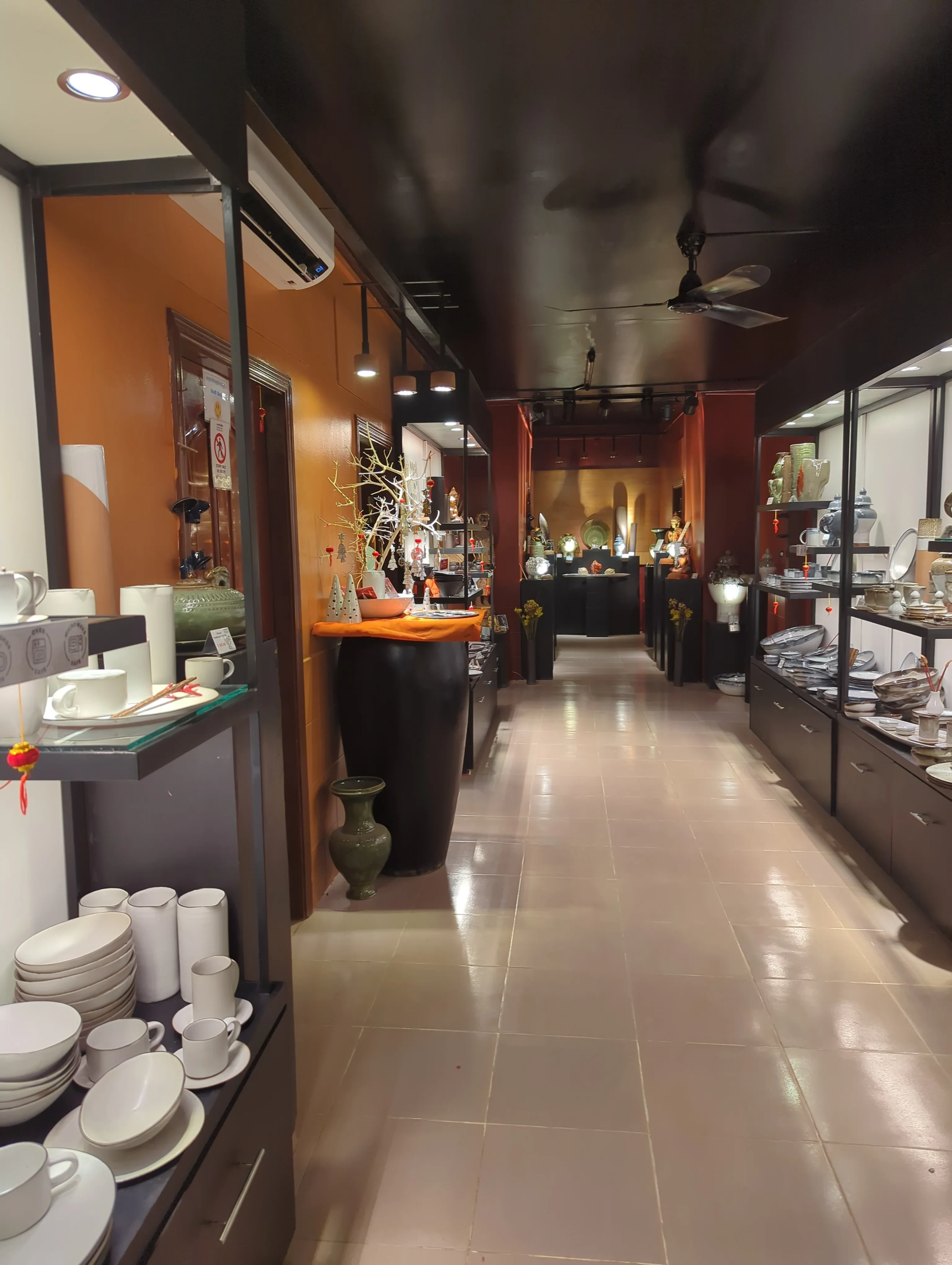
The gift shop features handmade ceramic bowls, plates, mugs, and decorative pieces produced in the workshop. Visitors can browse a range of items including tableware, vases, and small souvenirs inspired by traditional Khmer designs.
Many of the ceramics are created using the same techniques demonstrated in the studio, giving visitors the chance to purchase authentic pieces made on site. Some items are simple everyday pottery, while others are larger decorative works designed for collectors and home display.
A Social Enterprise
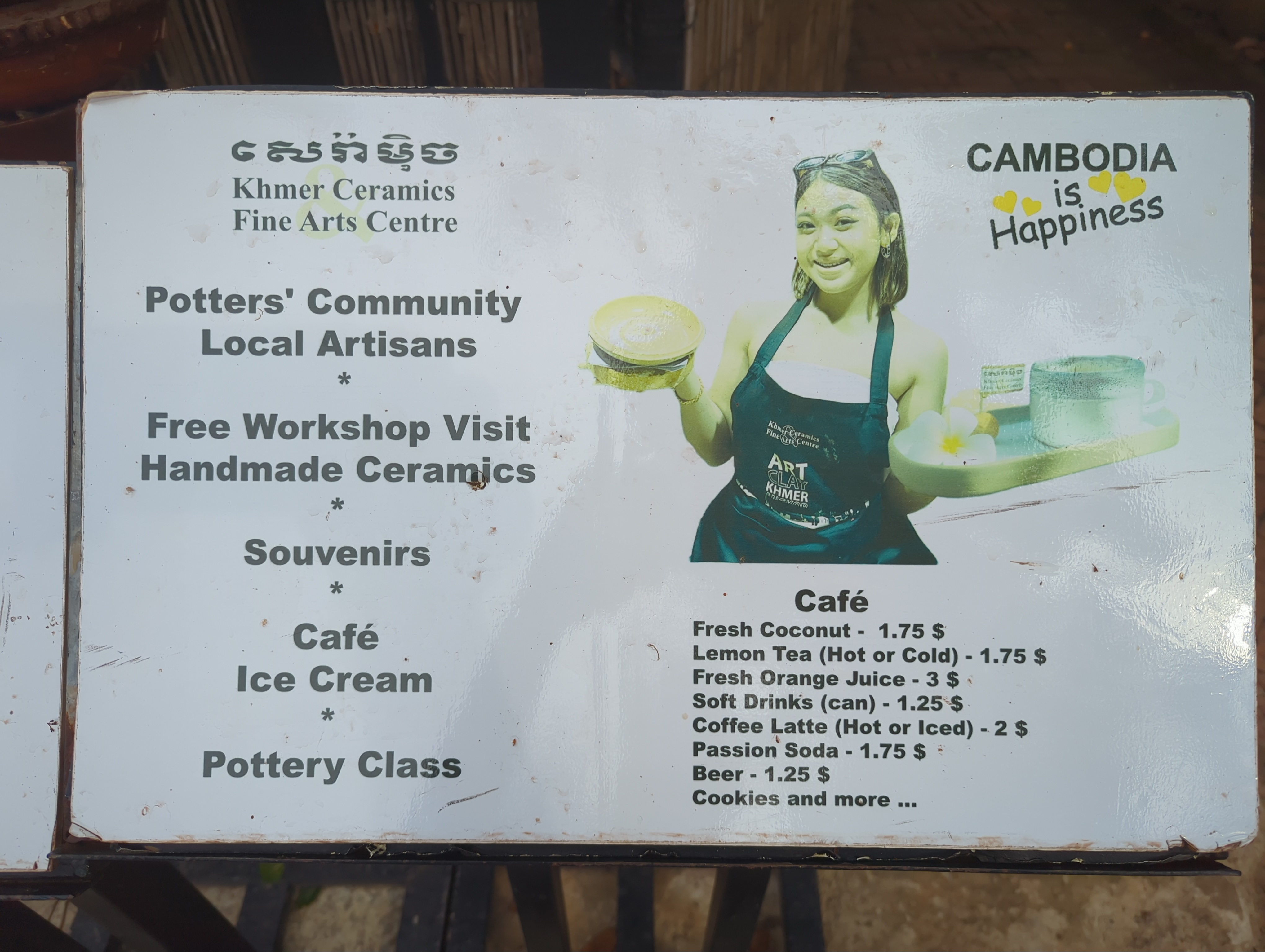
The Khmer Ceramics Fine Art Centre also operates as a social enterprise that provides employment opportunities for local residents, including individuals with hearing impairments and people from disadvantaged backgrounds.
In addition to regular employment, the organization offers training in ceramic production and workshop skills. Some staff members also receive housing support, helping create stable long-term opportunities within the local community.
Where the Khmer Ceramics Fine Art Centre Is Located
Khmer Ceramics Fine Art Centre
#0207 River Road
Treang Village, Slorkram Commune
Siem Reap, Cambodia
Opening Hours
Daily: 8:00 AM – 8:00 PM
Contact Information
- Phone: +855 17 843 014
- Email: [email protected]
- Website: www.khmerceramics.com