
The Angkor National Museum: A Modern-day Experience
Most visitors come to Siem Reap for the temples of Angkor, but one of the smartest ways to understand them is to start at the Angkor National Museum. It gives you the historical, religious, and architectural context that turns those temple visits into something much more meaningful.
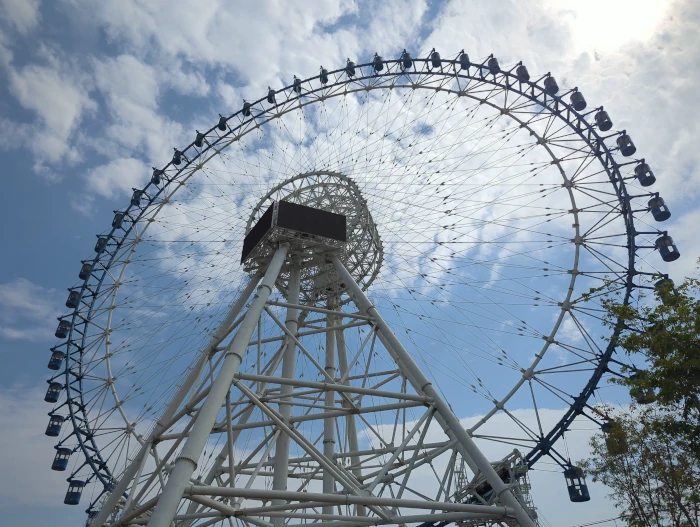
After your museum visit, you can explore Angkor Wat with new insight, enjoy a peaceful walk at the Angkor Botanical Garden, or try a creative workshop at the Khmer Ceramics Fine Arts Centre. For a unique city view, visit the Angkor Eye Ferris Wheel.
Through sculptures, inscriptions, and themed galleries, the museum shows how the Khmer Empire rose, organized society, and built some of Southeast Asia's most remarkable monuments.

Topics In This Guide
- What Is the Angkor National Museum?
- History and Cultural Context
- Museum Galleries Overview
- 1,000 Buddha Gallery
- Religion and Beliefs
- Great Khmer Kings
- Angkor Wat: Architecture and Engineering
- Story from Stone (Artifacts)
- Gift Shop
- Visitor Experience
- Essential Information
- Who Should Visit?
- Final Verdict
- Overall Recommendation & Quick Takeaways
What Is the Angkor National Museum?
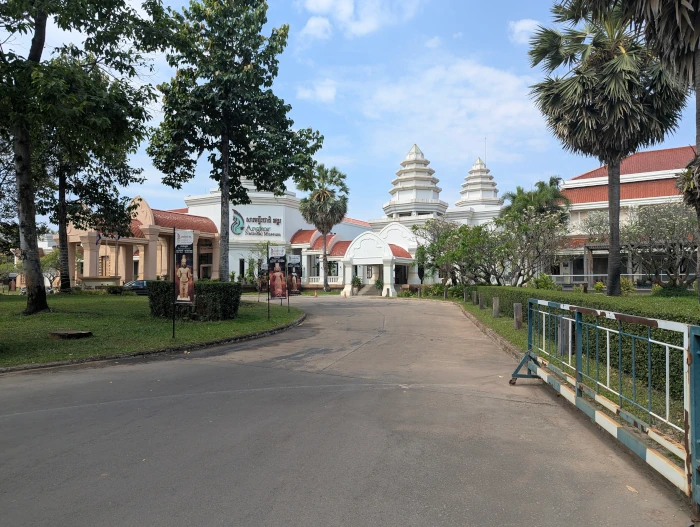
The Angkor National Museum is a modern archaeological museum dedicated to preserving and explaining the art, history, and cultural achievements of the Khmer Empire. Its primary focus is the Angkor period (9th–14th century), when the Khmer civilization constructed monumental temple complexes such as Angkor Wat and Angkor Thom.
Unlike traditional museums, this one is designed as a narrative journey. Visitors move through themed galleries that explain religion, royal authority, architecture, and daily life—building a complete understanding of Angkor before ever stepping into the temples themselves.
History and Cultural Context
Opened in 2007, the museum was established to preserve artifacts discovered throughout the Angkor region and present them within a structured historical framework. Many of the objects on display are drawn from national collections and archaeological conservation efforts.
Its purpose is not only preservation, but interpretation—helping visitors understand the deeper meaning behind the temples scattered across the Angkor landscape.
Before entering the main galleries, visitors are introduced to the rise of the Khmer Empire through a short presentation. This overview explains how a powerful civilization emerged through a combination of engineering, religion, and centralized authority.
The Khmer Empire was built on three core pillars:
- Religious belief – Hinduism and later Buddhism shaped temple design and royal identity
- Engineering innovation – vast irrigation systems supported large populations
- Royal power – kings ruled as divine representatives
This foundation is essential for understanding everything that follows in the museum—and later, at Angkor itself.
Museum Galleries Overview
The museum is organized into a sequence of themed galleries that guide visitors through Khmer history in a logical progression.
- Briefing Hall – “The Museum Overture”
- 1,000 Buddha Gallery
- Gallery A – Khmer Civilization
- Gallery B – Religion and Beliefs
- Gallery C – Great Khmer Kings
- Gallery D – Angkor Wat
- Gallery E – Angkor Thom
- Gallery F – Story from Stone
- Gallery G – Ancient Costume
Following this sequence allows visitors to build knowledge step-by-step, rather than viewing artifacts in isolation.
1,000 Buddha Gallery
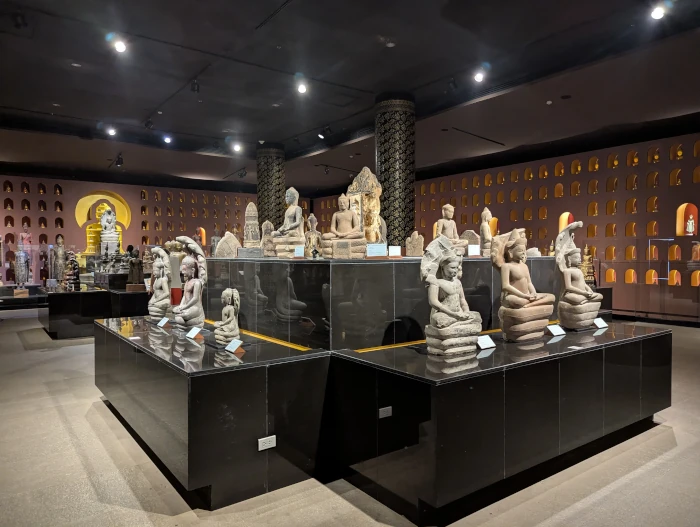
This gallery is one of the most visually striking spaces in the museum. Hundreds of Buddha statues are arranged in symmetrical rows, creating a calm, almost meditative environment.
The statues represent different artistic styles and historical periods, allowing visitors to observe how Buddhist iconography evolved over time. Subtle variations in posture, facial expression, and carving techniques reflect changes in religious influence and artistic tradition.
This gallery is not just visual—it sets the emotional tone for the museum and highlights the enduring importance of Buddhism in Cambodian culture.
Religion and Beliefs
Religion was not merely a part of Khmer civilization—it was the organizing principle behind nearly everything: the layout of cities, the design of temples, the legitimacy of kings, and the daily rituals of ordinary people. This gallery explains how Hinduism and Buddhism influenced every aspect of Angkor, from architectural symbolism to royal authority.
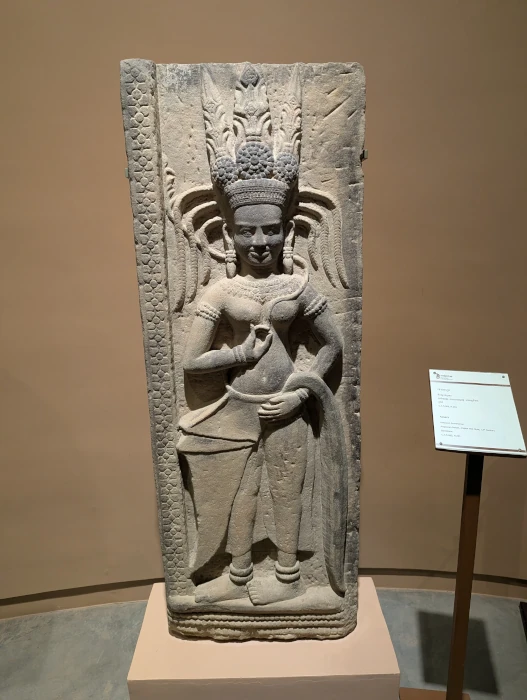
Visitors encounter sculptures of deities, symbolic carvings, and iconography that reveal how spiritual belief shaped daily life. Figures such as devatas and apsaras—often seen in temple reliefs—represent divine presence and cosmic order. The transition from Hinduism to Buddhism is traced through changing artistic styles, with later sculptures showing distinctly Buddhist forms gradually replacing Hindu deities.
What makes this gallery effective is how it connects belief to architecture. After seeing these exhibits, the symbolism embedded in every temple doorway, lintel, and tower becomes legible in a way it simply isn't without this context.
Great Khmer Kings
This gallery focuses on the rulers who defined the Khmer Empire, and it's here that the temple-building program starts to make sense. Each king needed to demonstrate divine authority, and the primary way they did that was through monumental construction.
Jayavarman II (early 9th century) established the empire and the concept of the god-king. Suryavarman II built Angkor Wat itself—the largest religious monument ever constructed—as both a temple to Vishnu and a statement of supreme power. Jayavarman VII, perhaps the most ambitious builder of all, constructed Angkor Thom, the Bayon, and dozens of hospitals and rest houses across the empire.
These kings were not only political leaders but religious figures who used architecture to legitimize their rule. The gallery presents their stories through inscriptions, portraits, and artifacts that connect individual rulers to the specific temples they built—context that transforms your later visit to those sites.
Angkor Wat: Architecture and Engineering
This gallery examines how the design of Angkor Wat reflects symbolic and cosmological principles. The temple stands on a rectangular site of approximately 1,300 by 1,500 meters, centered on five towers in a quincunx formation. Concentric galleries surround the towers, connected by a long causeway to the outer enclosure and a broad defensive moat.
This precise layout represents Mount Meru, the center of the universe in Hindu cosmology, expressed through architecture and scale.
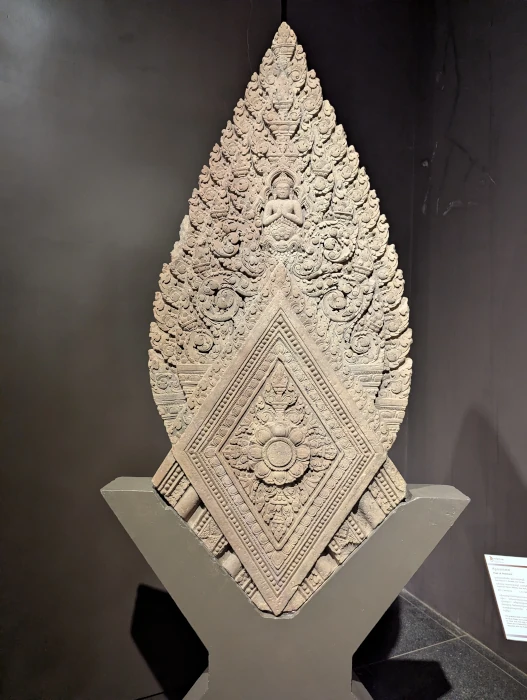
Models and diagrams show how temples were constructed, while exhibits highlight the Khmer Empire’s advanced engineering systems, including reservoirs and irrigation networks.
Even the name "Angkor Wat" shows the complex history. "Wat" denotes a temple or pagoda, whereas "Angkor" is derived from the Sanskrit term Nagara, which means city or capital. The phrase most likely became popular after the site was converted into a Buddhist monument in the 15th and 16th centuries, long after its original construction.
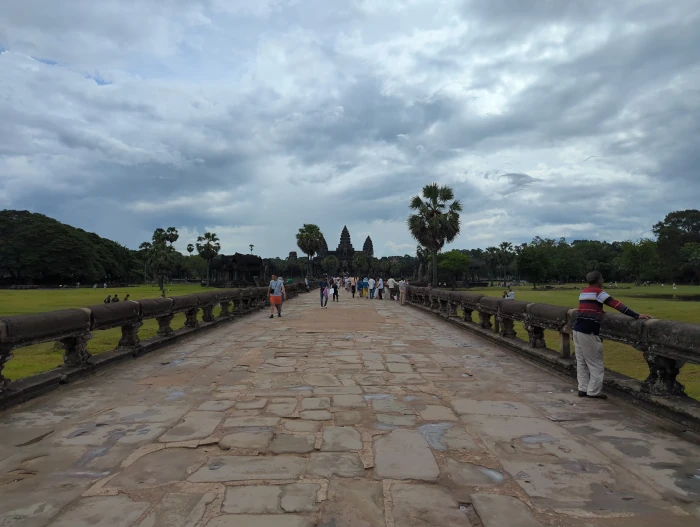
Additional information about its origins can be gleaned from inscriptions discovered within the temple complex. The southwestern wing of the third gallery has references to the name "Paramavishnuloka," which is the posthumous title of King Suryavarman II, who is credited with building Angkor Wat and ruled from 1113 to 1150 AD. The temple's original dedication to the Hindu deity Vishnu reinforced its function as a symbol of divine rule in addition to being a place of worship.
Story from Stone (Artifacts)
This gallery presents inscriptions, carvings, and artifacts that serve as historical records of the Khmer Empire.
Stone stelae and carved panels document royal decrees, religious donations, and aspects of daily life. These are not simply decorative objects—they are primary historical sources that provide direct insight into Khmer society.
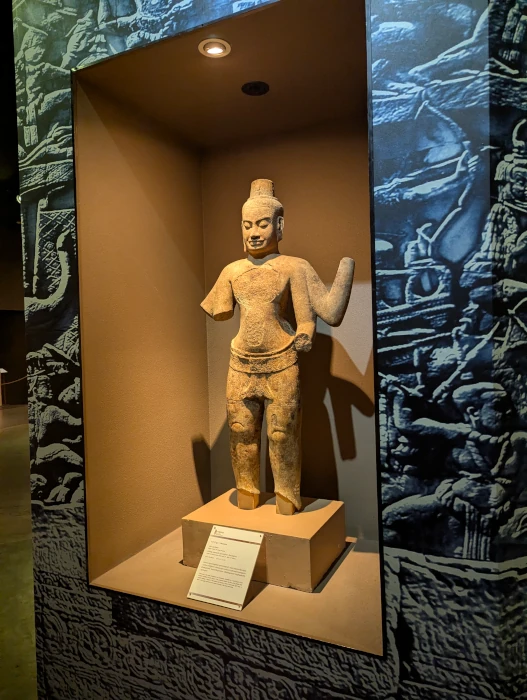
Additional artifacts, including bronze figures and ceremonial objects, reveal the diversity of materials and craftsmanship beyond the large stone temples.
Gift Shop
The museum’s gift shop feels less like a retail space and more like a final, carefully curated gallery—one that translates centuries of Khmer history into objects you can actually take home. After moving through the exhibits, the transition is seamless: the motifs, materials, and craftsmanship you’ve just seen behind glass reappear here in contemporary form.
Shelves are lined with ceramic vessels and sculptural pieces that echo Angkor-era design, while nearby displays showcase intricate beadwork and jewelry inspired by traditional adornment. Much of it has a distinctly artisan feel—less mass-produced souvenir, more small-batch craftsmanship. Even the layout reinforces this impression, with open spacing and clean presentation that mirrors the museum’s exhibition style.
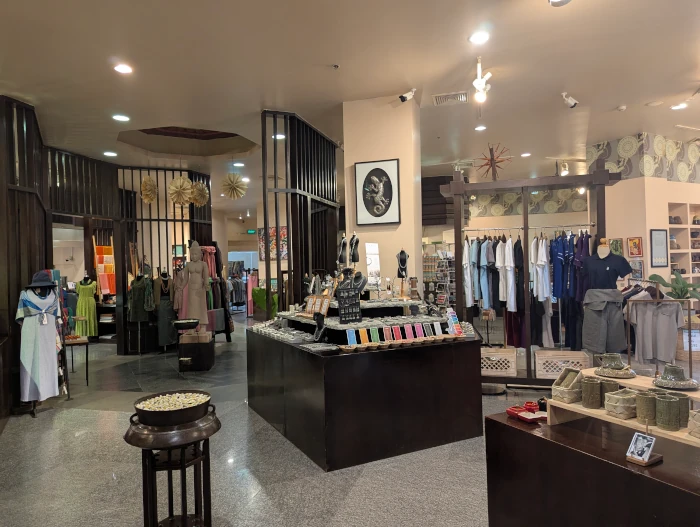
Textiles and clothing add another layer, blending modern cuts with subtle references to Khmer patterns and textures. These aren’t costumes or replicas; they’re wearable interpretations, designed to carry cultural influence without feeling theatrical. The same applies to the jewelry displays, where traditional materials and forms are reimagined into pieces that feel contemporary but rooted.
Toward the back, a selection of books and cultural materials grounds everything in context, offering visitors a way to go deeper into Cambodian history and the Angkor period. It’s a smart inclusion—after seeing the artifacts, there’s a natural curiosity to understand more.
What stands out most is the intent. This isn’t a generic souvenir shop—it’s an extension of the museum’s narrative. Instead of ending your visit at the exit, it gives you a way to carry a small piece of that experience forward, whether through design, craftsmanship, or simply a better understanding of the culture you’ve just explored.
Visitor Experience
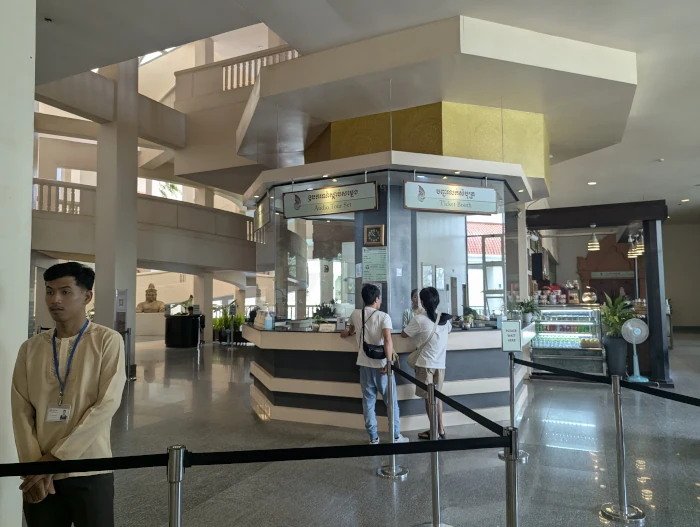
The Angkor National Museum is fully air-conditioned and designed for a comfortable and structured experience. Exhibits are arranged to guide visitors naturally from one topic to the next.
Most visitors spend between one and two hours in the museum. Audio guides are available and provide valuable context for those who want a deeper understanding of the exhibits.
This is an excellent way to spend half a day understanding the sites you’re about to visit. It puts Cambodian history into context while offering a comfortable, air-conditioned, and stress-free environment with refreshments available.
For the best experience, visit the museum before exploring Angkor. The knowledge gained here significantly enhances what you will see at the temples.
Essential Information
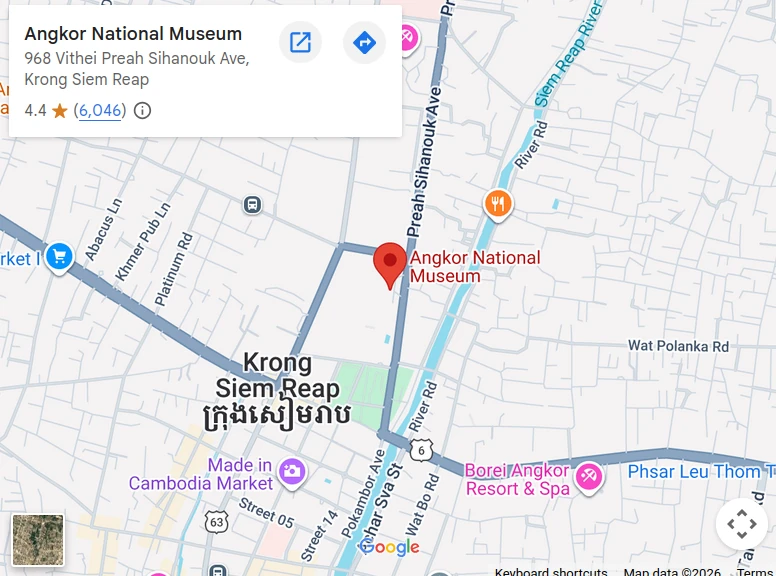
Angkor National Museum
968 Vithei Preah Sihanouk Ave, Krong Siem Reap
Opening Hours
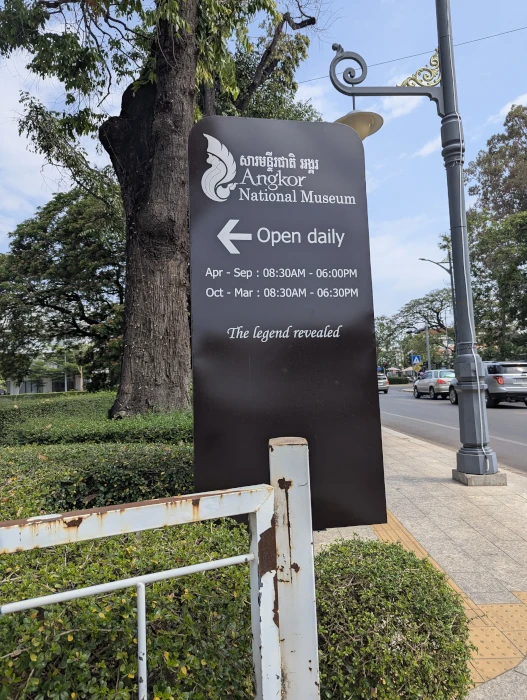
Daily: 8:30 AM – 6:00 PM
Ticket Price
Foreign Adults: $12
Khmer Citizens: Discounted rates available
Audio Guide
Available in multiple languages (additional $5 fee)
The museum is located a short distance from central Siem Reap and can be reached by tuk-tuk, bicycle, or taxi.
Who Should Visit?
Almost everyone visiting Siem Reap will benefit from this museum—but it's especially valuable for first-time visitors to Southeast Asia, families with older children who can engage with the exhibits, history enthusiasts, and anyone who wants their temple visit to feel meaningful rather than just photogenic.
If you only have one day for the temples, the museum makes an excellent morning start before heading to Angkor Wat in the afternoon. If you have multiple days, visit the museum first and let the context build throughout your trip.
Final Verdict
Without context, Angkor's temples can feel like impressive but disconnected ruins. The Angkor National Museum provides the historical and cultural framework that transforms them into something far more meaningful.
The galleries build knowledge step by step, the gift shop is genuinely worth browsing, and the air-conditioned comfort makes it a welcome contrast to the heat outside. For anyone visiting Angkor, this museum is not optional—it's the foundation that makes the entire experience richer.
Overall Recommendation
Overall Recommendation: 8 / 10 - Essential context for understanding Angkor, in a comfortable and well-designed space.
Quick Takeaways
- Time: Plan for 1.5 to 2.5 hours, longer with the audio guide
- Best Strategy: Visit the museum before exploring the temples — the context makes everything else better
- Experience Value: 8.5 / 10
- Uniqueness: 7 / 10
- Accessibility: 9 / 10 — fully air-conditioned, well-signed, comfortable throughout
- Audio Guide: Recommended ($5 extra) — adds significant depth
- Gift Shop: One of the best in Siem Reap — worth browsing even if you don't buy
- Combine With: Angkor Wat in the afternoon, or the Khmer Ceramics Centre for a full cultural day